What Shows Up on a Rental Background Check
Before a landlord ever meets you, a background check has already introduced you. Here’s exactly what it tends to include — and how to get ahead of it.
A rental background check is the behind-the-scenes report that quietly shapes most application decisions. Knowing what’s in it — and that you can see it too — puts you back in control.
Here’s what landlords typically pull, and what to do about it.
Credit, screening, and public records
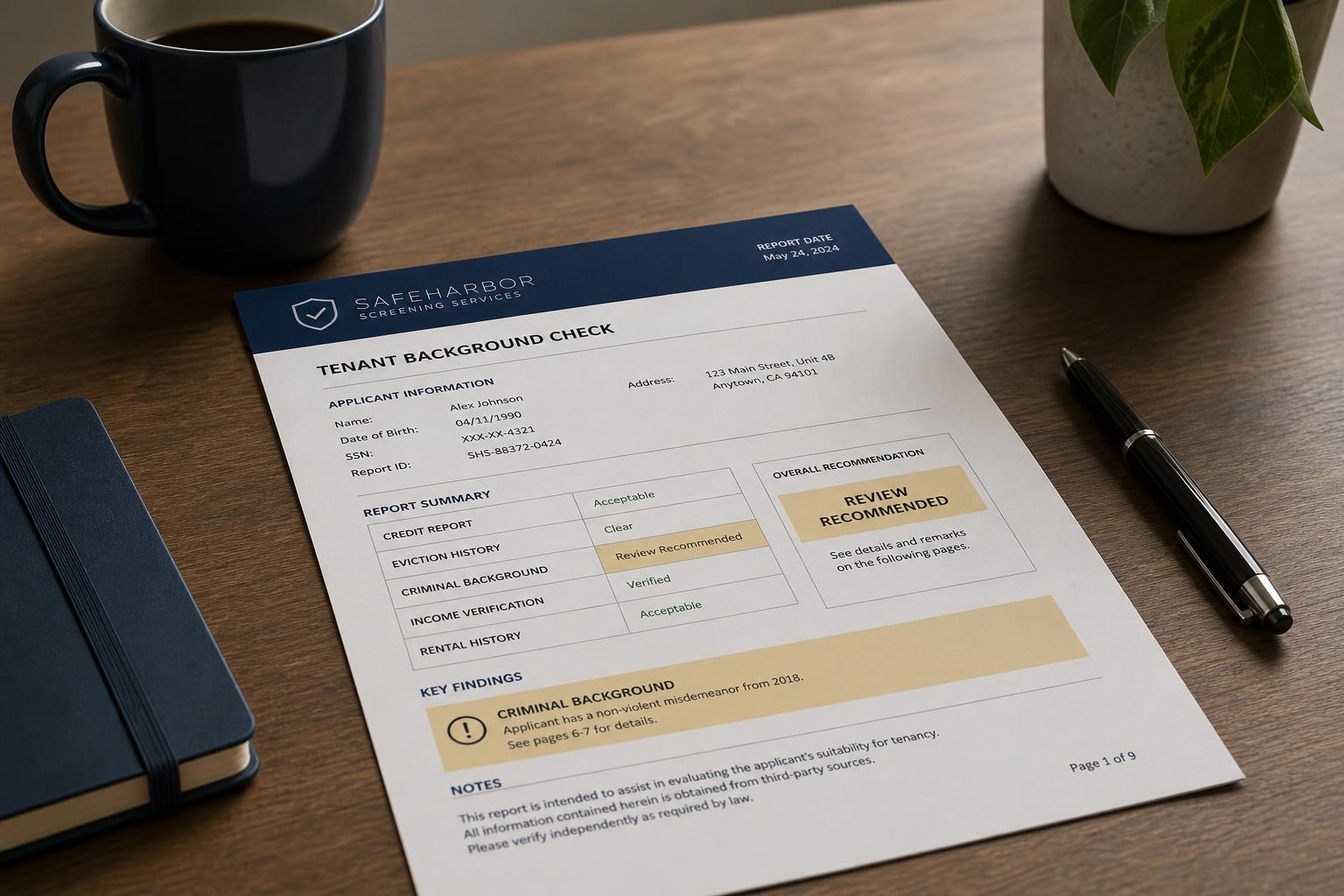
A “background check” for a rental is usually a bundle: your credit information, a tenant-screening report, and sometimes public records and a criminal check. It’s assembled by consumer reporting agencies and often ends with a recommendation or score. We go deep on the screening piece in how to read your tenant screening report.
What landlords actually see
In practice, landlords look for a few signals: whether you pay on time (credit and payment history), whether you’ve been evicted, your income relative to the rent, and any red flags in public records. They don’t usually see your exact score so much as a pass/fail recommendation or a risk tier — which is why two landlords can read the same history differently.
Eviction and criminal data (and accuracy issues)
Eviction and criminal records are where rental checks most often go wrong. Records are matched on names and dates of birth, so a dismissed case, a settled matter, or someone else’s record with a similar name can appear as if it’s yours and active. Fair-housing guidance also cautions landlords against blanket criminal-record bans — so context and accuracy matter.
Your FCRA rights to the report
These reports fall under the Fair Credit Reporting Act. That means if you’re denied based on one, the landlord must tell you and name the screening company — an adverse action notice — and you’re entitled to a free copy from that company. You also have the right to dispute anything inaccurate.

How to check yourself first
The smartest move is to run your own check before you apply: pull your credit from all three bureaus at AnnualCreditReport.com and request your file from the major tenant-screening companies. You’ll see what a landlord sees — with time to fix errors or prepare an explanation, instead of being blindsided after a wasted application fee.
Disputing errors
If you find a mistake — an account that isn’t yours, a dismissed eviction shown as active, a record belonging to someone else — dispute it with the screening company or bureau, in writing, with documentation. The same process covers credit-report errors: here’s how to dispute an error. Disputes are for genuine inaccuracies, not accurate records.
Key takeaways
- A rental background check bundles credit, tenant-screening, and sometimes public/criminal records.
- Landlords mostly see a recommendation or risk tier, not your exact score.
- Eviction and criminal data are error-prone — mismatched and dismissed cases are common.
- Under the FCRA you can get the report (free after a denial) and dispute inaccuracies.
- Check yourself before applying so you can fix errors or explain issues in advance.
See your rental background before a landlord does
A free 15-minute review walks through what’s on your credit report — and what may be inaccurate or worth explaining — so you apply prepared.
Free · about 15 minutes · no credit card · no obligation.
Sources: Fair Credit Reporting Act (FCRA) — adverse action and your right to the report and to dispute; Consumer Financial Protection Bureau (CFPB) — tenant screening; Federal Trade Commission (FTC) and HUD — background-check and fair-housing guidance. General education, not legal advice.