
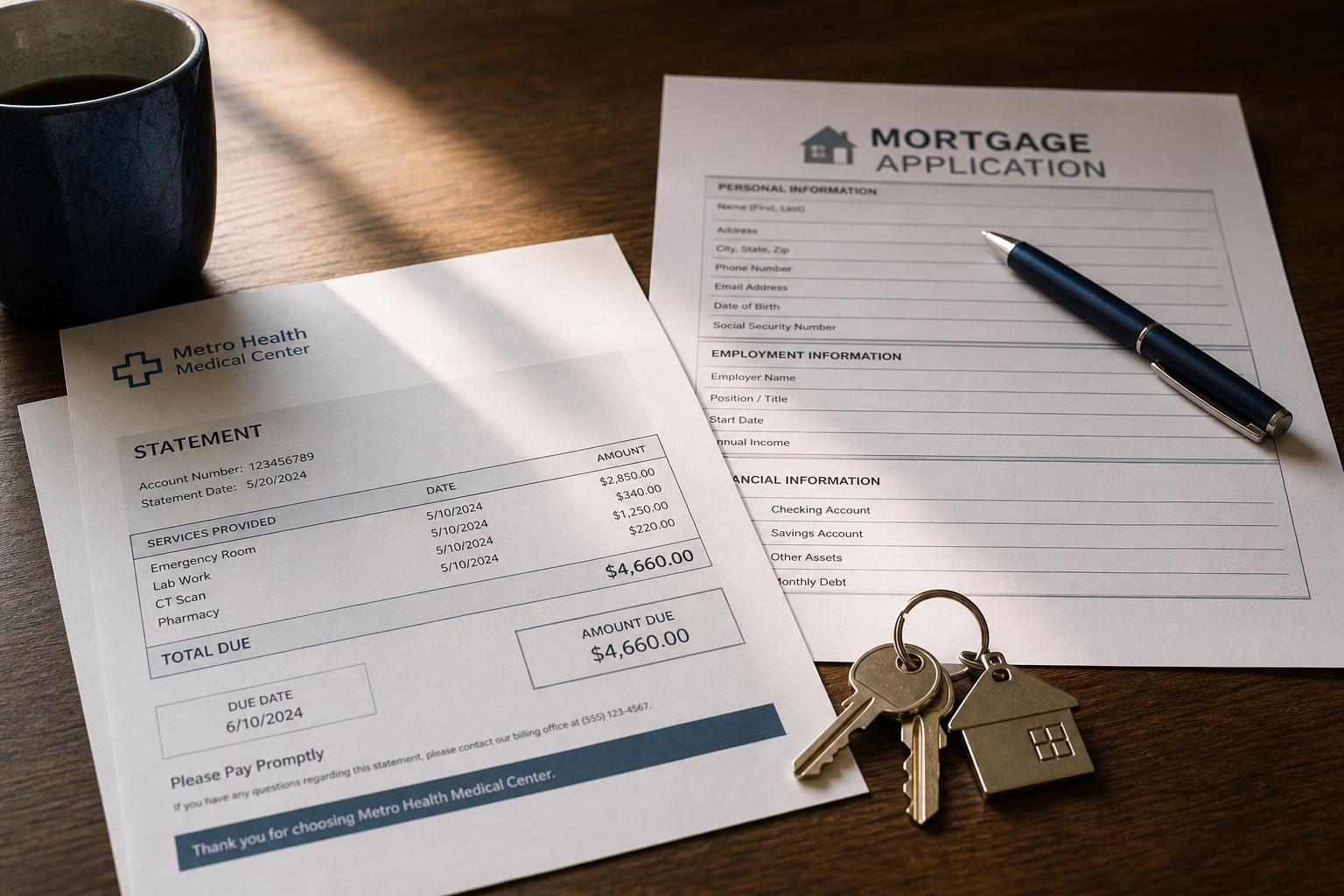
Medical Debt and Buying a House: Does It Affect Your Mortgage?
Worried an old medical bill could sink your mortgage? The picture is more forgiving than it used to be — but a few things are still worth handling first.
Buying a home means your finances get a thorough look, and medical debt is a common worry for hopeful buyers. The reassuring news: recent rule changes keep much medical debt off credit reports entirely — but it can still matter in a couple of ways.
Here’s how medical debt actually interacts with a mortgage.
How mortgage underwriting sees medical debt
Mortgage lenders pull your credit and review your debts and income closely. Medical debt enters the picture in two possible ways: as a collection on your credit report (if one is reporting), and as a monthly obligation if you’re on a payment plan. Underwriters are generally more lenient with medical collections than with, say, missed loan payments — but what’s reporting still matters.
The bureau rules work in your favor
Thanks to the credit bureaus’ changes, paid medical collections and those under $500 are kept off credit reports, and unpaid ones wait about a year before appearing. So a lot of medical debt doesn’t show up at all — see the full timeline of what changed. Less on your report means less for an underwriter to flag.
Collections vs. your debt-to-income ratio
Two different effects to separate. A medical collection on your report can affect your score and may prompt questions, but newer mortgage scoring often weighs medical collections less heavily. A payment plan, by contrast, adds a monthly obligation that counts toward your debt-to-income (DTI) ratio — which can affect how much home you qualify for. Neither is automatically disqualifying.
What to address before you apply
Before house-hunting, get ahead of it: confirm what medical items are actually reporting, dispute anything paid, under $500, or otherwise ineligible that still shows, and avoid taking on new debt. If you’re on a payment plan, know the monthly figure so you can factor it into your budget and DTI.

FHA vs. conventional nuances
Different loan programs treat debts a bit differently, and guidelines evolve, so how a given collection or plan is handled can depend on the loan type and the lender. Rather than assume, ask a mortgage professional how your specific situation would be viewed under the program you’re considering — and verify what they’re seeing on your report matches reality.
Verify what’s reporting first
The throughline: before a lender pulls your credit, you should know exactly what they’ll find. A medical collection that shouldn’t be there — paid, small, or mis-dated — is an error you can dispute (see do medical bills affect your credit). Clearing that up before you apply is far easier than explaining it mid-underwriting.
Key takeaways
- Much medical debt is kept off credit reports (paid, under $500, or within the ~1-year wait).
- A medical collection can affect your score; a payment plan adds to your debt-to-income ratio.
- Newer mortgage scoring often weighs medical collections less heavily — it’s rarely disqualifying.
- Before applying, confirm what’s reporting and dispute anything that shouldn’t be there.
- Loan programs differ — ask a mortgage pro how your situation is viewed, and verify your report.
Getting mortgage-ready with medical debt on your mind?
A free 15-minute review shows what medical items are actually reporting across all three bureaus — and what may not belong — before a lender ever looks.
Free · about 15 minutes · no credit card · no obligation.
Sources: Consumer Financial Protection Bureau (CFPB) — medical debt and credit reporting; the nationwide bureaus’ medical-collection rules. Mortgage guidelines vary by program and lender and change over time — verify with a mortgage professional. General education, not financial advice.