How Often Should You Check Your Credit?
A surprising number of people avoid checking their credit for fear of hurting it. That fear is backwards — here’s the right rhythm.
Checking your own credit is one of the most useful financial habits there is — and one of the most avoided, because of a stubborn myth that looking at your score lowers it.
It doesn’t. Here’s how often to check, where, and when to look more closely.
Checking your own credit is a soft pull
When you check your own credit, it’s a soft inquiry — it has no effect on your score, ever, no matter how often you do it. The score-lowering inquiries are hard pulls from applying for new credit, which is a completely different thing. So check freely.
Free weekly reports at AnnualCreditReport.com
You’re entitled to free credit reports from all three bureaus — Equifax, Experian, and TransUnion — weekly, at AnnualCreditReport.com, the only federally authorized source. A common habit is to rotate: pull one bureau every few months, or pull all three at once a couple of times a year. Either way, you’re covered at no cost.
Report vs. score — check both
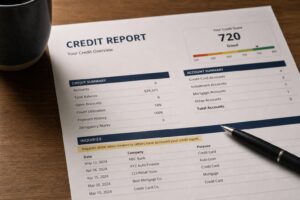
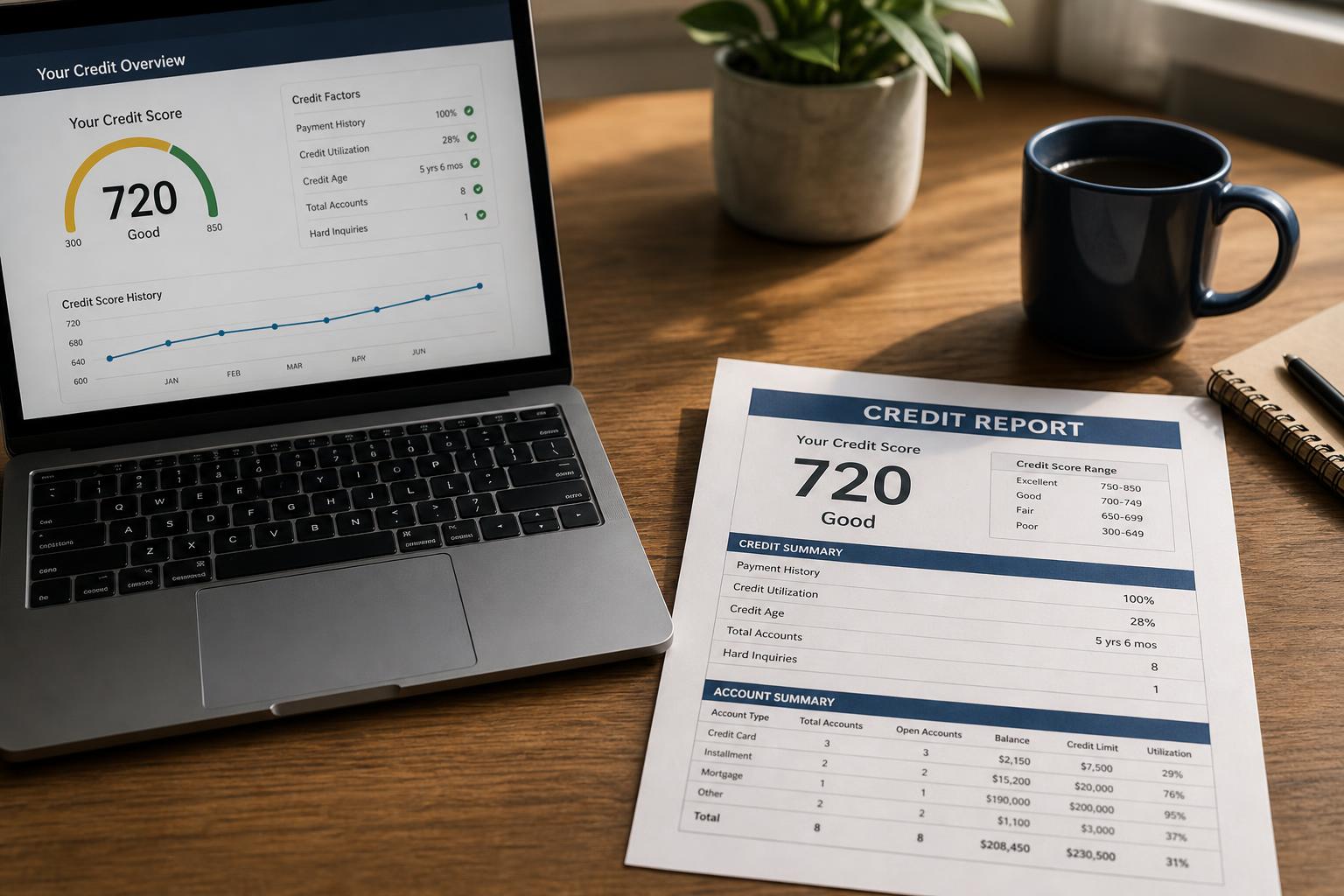
They’re not the same thing. Your credit report is the detailed record of your accounts and history; your score is a number calculated from it. Many banks and card issuers show your score for free, but the score alone won’t reveal an error or a fraudulent account — only reading the report does. Check both.
When to check more often
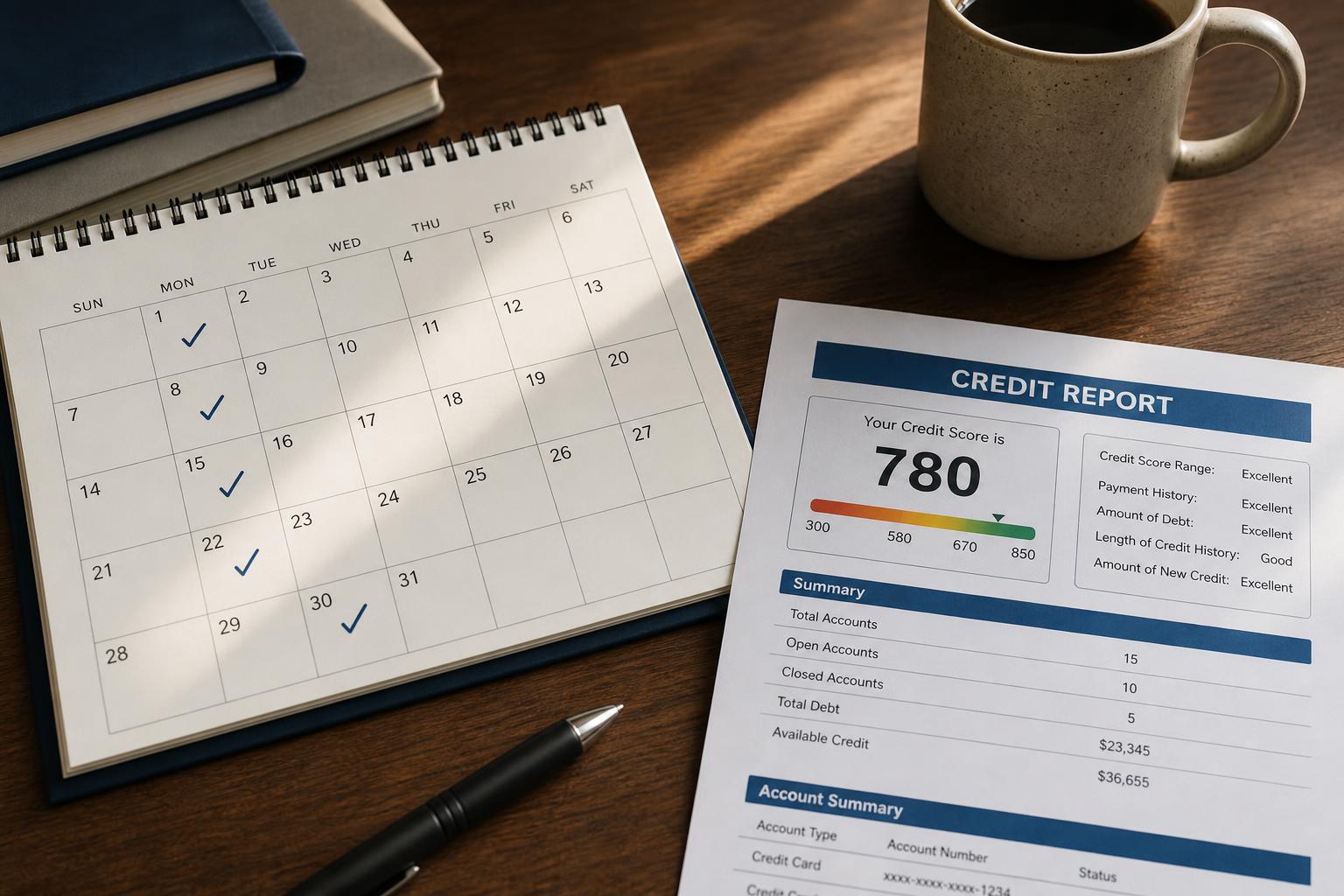
Step up the frequency around key moments:
- Before a big application — a rental, an auto loan, a mortgage — so there are no surprises.
- After a denial, to see what the decision was based on.
- After a data breach or any sign of fraud.
- While rebuilding, to track progress.
Monitoring options
If you want continuous coverage, credit-monitoring services alert you to changes — a new account, a new inquiry, a balance jump — which is useful for catching fraud early. Monitoring is a convenience layer on top of your free reports, not a replacement for reading them. Whatever you use, the goal is the same: no surprises, and an early warning if something’s wrong.
Key takeaways
- Checking your own credit is a soft pull — it never lowers your score.
- You get free weekly reports from all three bureaus at AnnualCreditReport.com.
- Check both your report (for errors/fraud) and your score (for the trend).
- Check more often before a big application, after a denial, or after a breach.
- Monitoring adds early alerts, but it doesn’t replace reading your reports.
Want a clear read on what’s on your report?
A free 15-minute review walks through what’s currently reporting across all three bureaus — and flags anything worth a closer look — with no obligation.
Free · about 15 minutes · no credit card · no obligation.
Sources: Consumer Financial Protection Bureau (CFPB) — checking your credit and the difference between reports and scores; Federal Trade Commission (FTC) — AnnualCreditReport.com and free reports. General education, not financial advice.