
What Is a Good Credit Score? The Ranges Explained
There’s no single passing grade — but there are well-defined bands. Here’s where the lines fall, and what each one actually gets you.
“Is my score good?” is one of the most common credit questions, and the honest answer is: it depends on what you’re trying to do. Still, the scoring companies group scores into clear ranges, and knowing them tells you roughly where you stand.
Here are the bands, and how to read them.
The score ranges, poor to exceptional
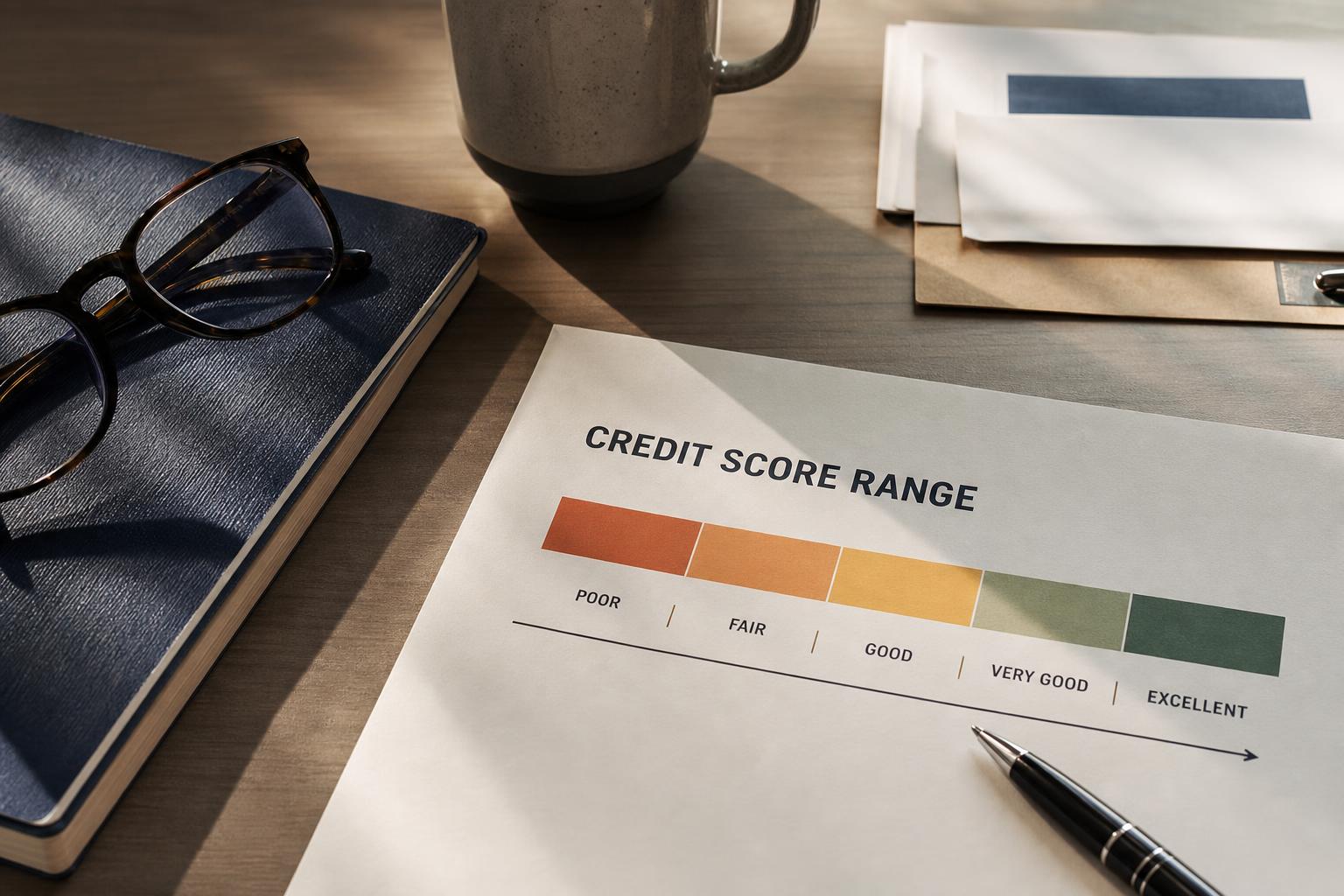
Most scores run on a 300–850 scale. The widely used FICO bands are:
- Exceptional: 800–850
- Very good: 740–799
- Good: 670–739
- Fair: 580–669
- Poor: 300–579
“Good” in the formal sense starts around 670 — but the label matters less than what the score lets you do.
FICO vs. VantageScore bands
The two main models use similar ranges, with slightly different cutoffs and labels. So your VantageScore and FICO can land in different-sounding bands even though your underlying credit is the same. Don’t fixate on one number or label — both read from the same credit-report data.
What each range gets you
Higher bands unlock easier approvals and lower rates:
- 740+: the best rates and terms on most credit.
- 670–739: solid approvals at fair rates.
- 580–669: approvable, but often at higher rates and with conditions.
- Below 580: limited options; expect higher costs and more scrutiny.

“Good” is relative to your goal
The score you need depends on what you’re after. Renting an apartment, financing a car, and qualifying for a mortgage each have different practical bars — and factors beyond the score (income, down payment, history) come into play. A score that’s “fair” on paper may be perfectly fine for one goal and a hurdle for another.
How to move up a band
The levers are the familiar ones: pay every bill on time, keep utilization low, let your accounts age, avoid a rush of new applications, and dispute genuine errors. Moving up a band is a matter of steady habits over months, not a quick trick — and crossing a threshold (say, from fair into good) can meaningfully change the offers you get.
Key takeaways
- Scores run 300–850; “good” formally starts around 670 (FICO).
- FICO and VantageScore use similar but not identical bands, so labels can differ.
- Higher bands mean easier approvals and lower rates; 740+ gets the best terms.
- The score you actually need depends on your goal — rent, auto, or mortgage.
- Move up with on-time payments, low utilization, account age, and error disputes.
Wondering what your score qualifies you for?
A free 15-minute review looks at what’s on your report and which factors are holding your score in its current band — so you know where to focus.
Free · about 15 minutes · no credit card · no obligation.
Sources: Consumer Financial Protection Bureau (CFPB) — credit scores and ranges; FICO and VantageScore — published score bands. Lenders set their own cutoffs; this is general education, not financial advice.