
How to Place a Credit Freeze (and When to Lift It)
A credit freeze is free, powerful, and underused. Here’s exactly how to set one up — and how to lift it when you actually need credit.
A credit freeze is one of the best free tools for protecting yourself from identity theft, yet many people skip it because they’re unsure how it works. It’s simpler than it sounds.
Here’s the step-by-step.
What a credit freeze does
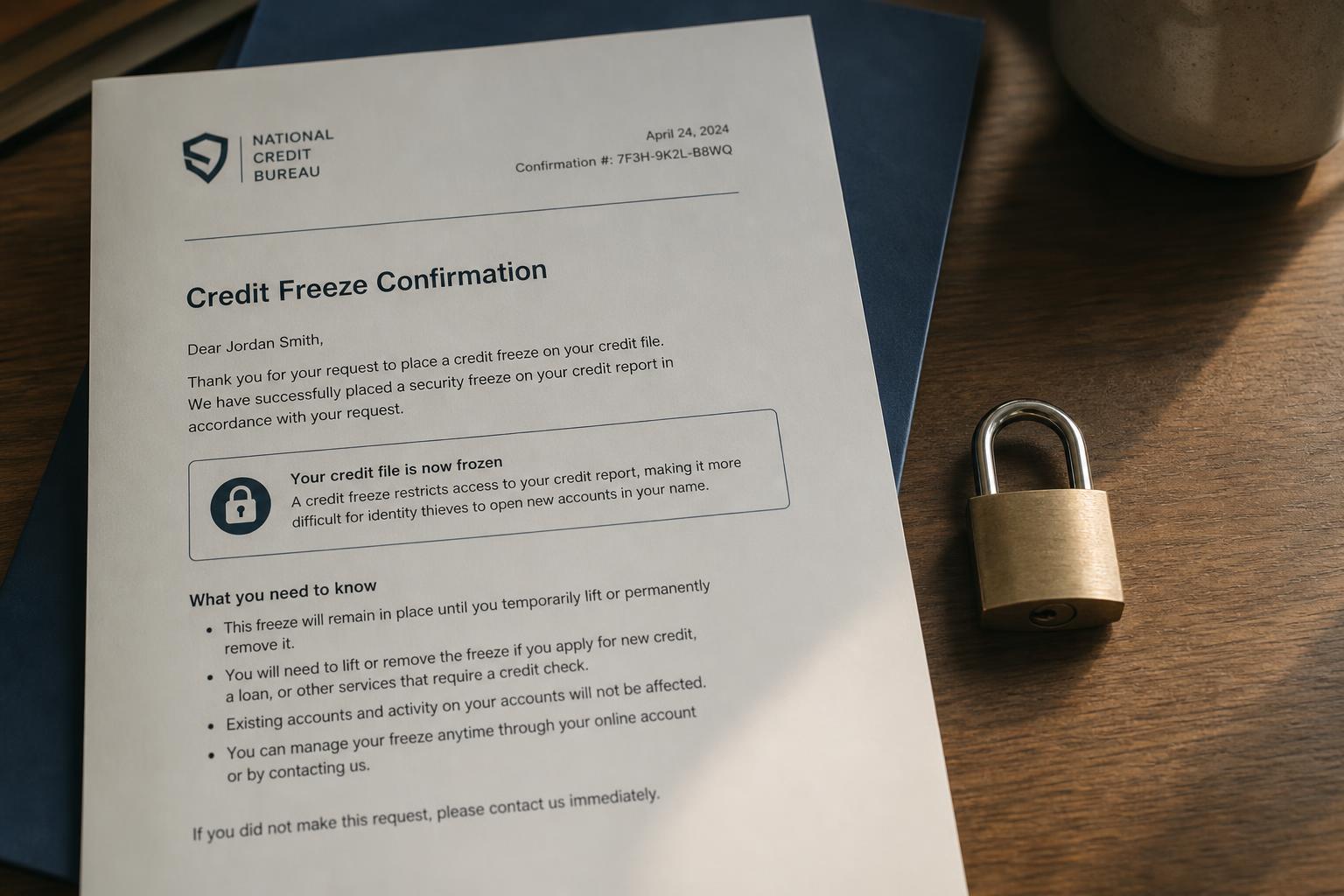
A freeze (or “security freeze”) restricts access to your credit report. Since lenders almost always check your credit before opening an account, a freeze effectively blocks new accounts from being opened in your name — the strongest protection against new-account fraud. It’s free by federal law, doesn’t affect your credit score, and doesn’t touch your existing accounts. For how it compares to alternatives, see fraud alert vs. freeze vs. lock.
Place one at all three bureaus
The key detail: you must freeze your credit at each of the three bureaus separately — Equifax, Experian, and TransUnion — because a lender might check any of them. Each offers a free freeze online, by phone, or by mail. Our freeze your credit tool has the official links and phone numbers for all three in one place.
What you’ll need
Setting up a freeze is quick. Each bureau will ask you to verify your identity — typically your name, address, date of birth, Social Security number, and sometimes answers to security questions. You’ll create an account or receive a PIN you’ll use to manage the freeze later, so keep it somewhere safe.
Temporarily lifting it
A freeze doesn’t lock you out of your own credit life. When you need to apply for a loan, card, or apartment, you simply temporarily lift (“thaw”) the freeze — at the relevant bureau, online or by phone with your PIN — then re-freeze afterward. Lifts can be temporary (for a set window) or for a specific creditor, and they’re free too.
When to freeze (including for kids)
A freeze makes sense any time you’re not actively applying for credit — which is most of the time. It’s especially worth doing after a data breach or any sign of fraud. You can also freeze a child’s credit: kids are common identity-theft targets precisely because no one is watching their (nonexistent) credit.
Freeze vs. lock vs. alert
A quick reminder of the alternatives: a fraud alert is lighter (it asks lenders to verify you, but doesn’t block access), and a credit lock is a paid-or-bundled product that works like a freeze but is governed by a contract rather than the law. For most people, the free, law-backed freeze is the best default — full comparison here.
Key takeaways
- A credit freeze is free, blocks new-account fraud, and doesn’t affect your score.
- You must place it at all three bureaus separately — Equifax, Experian, TransUnion.
- You’ll verify your identity and get a PIN or account to manage it; keep it safe.
- Temporarily lift (thaw) the freeze when you apply for credit, then re-freeze — also free.
- Freeze when you’re not applying for credit, after a breach, and for your kids.
Locking down your credit?
A free 15-minute review helps you understand what’s on your credit report and what protective steps fit your situation — before or after you freeze. No obligation.
Free · about 15 minutes · no credit card · no obligation.
Sources: Federal Trade Commission (FTC) and Consumer Financial Protection Bureau (CFPB) — security freezes and your rights; Fair Credit Reporting Act (FCRA) — the free-freeze right (since 2018). Processes vary slightly by bureau; this is general education, not legal advice.