
Fraud Alert vs. Credit Freeze vs. Credit Lock: Which Do You Need?
Three tools, three very different levels of protection — and a lot of confusion between them. Here’s how a fraud alert, a credit freeze, and a credit lock compare.
When you’re worried about identity theft — after a data breach, a lost wallet, or just a gut feeling — you’ll run into three options that sound alike but aren’t: a fraud alert, a credit freeze, and a credit lock.
They protect your credit in different ways, and two of them are free. Here’s how to tell them apart and pick the right one.
The three tools at a glance
Quick version before the detail:
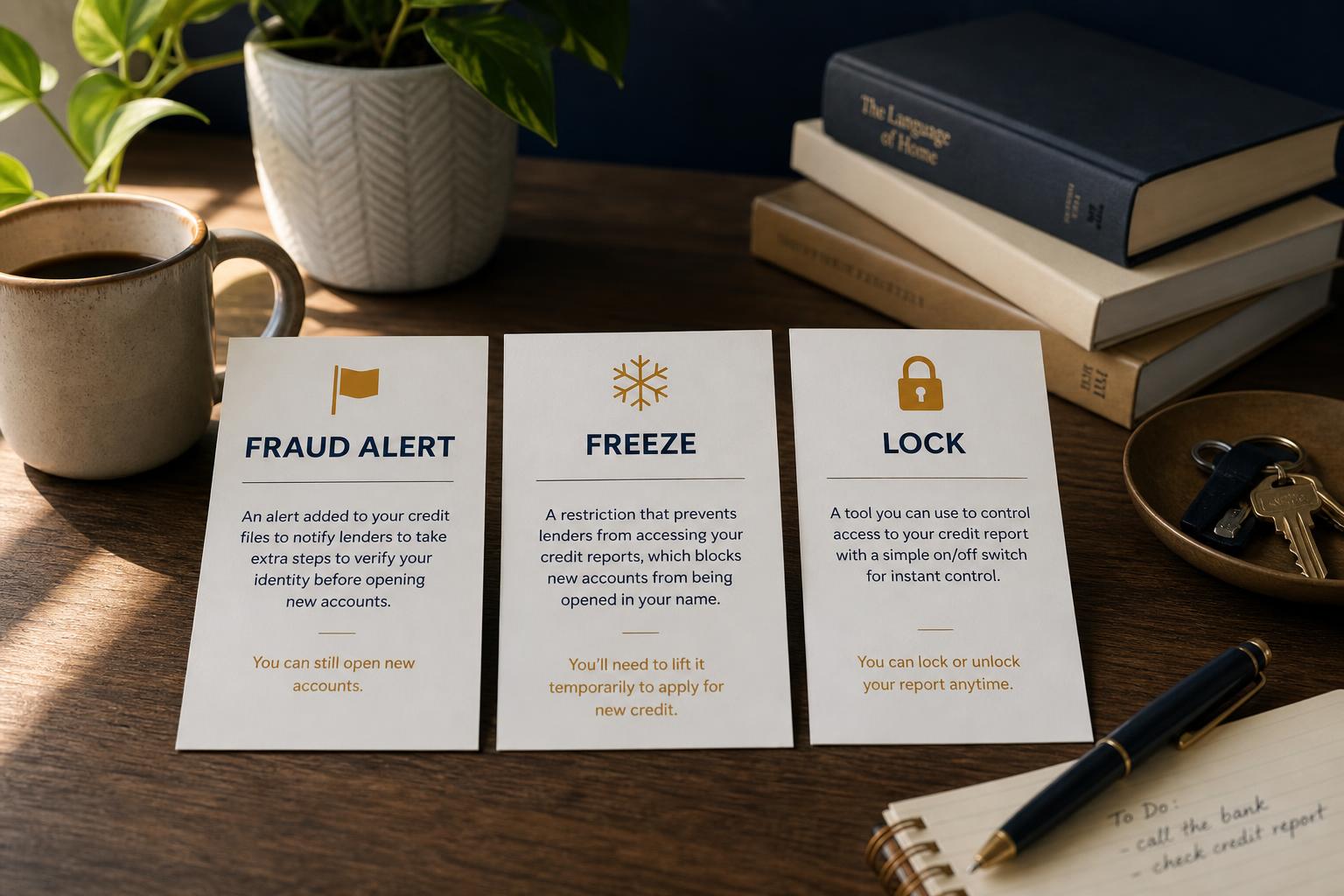
- Fraud alert — free; warns lenders to verify your identity before granting credit. Lightest touch; you can still use your credit normally.
- Credit freeze — free and backed by federal law; blocks new creditors from accessing your report, so new accounts can’t be opened. Strongest protection.
- Credit lock — a product from the bureaus; similar effect to a freeze, toggled instantly in an app, but governed by a contract rather than the law.
Fraud alert: free and light
A fraud alert is a flag on your credit file that tells any business checking your credit to take extra steps to verify you’re really you before opening an account. You place it for free, and you only have to contact one of the three bureaus — that bureau must notify the other two.
An initial alert lasts one year and is renewable. Confirmed identity-theft victims with a report can get an extended alert that lasts seven years. The trade-off: it doesn’t block access to your report — it just asks for extra verification — so it’s lighter protection.
Credit freeze: free and strongest
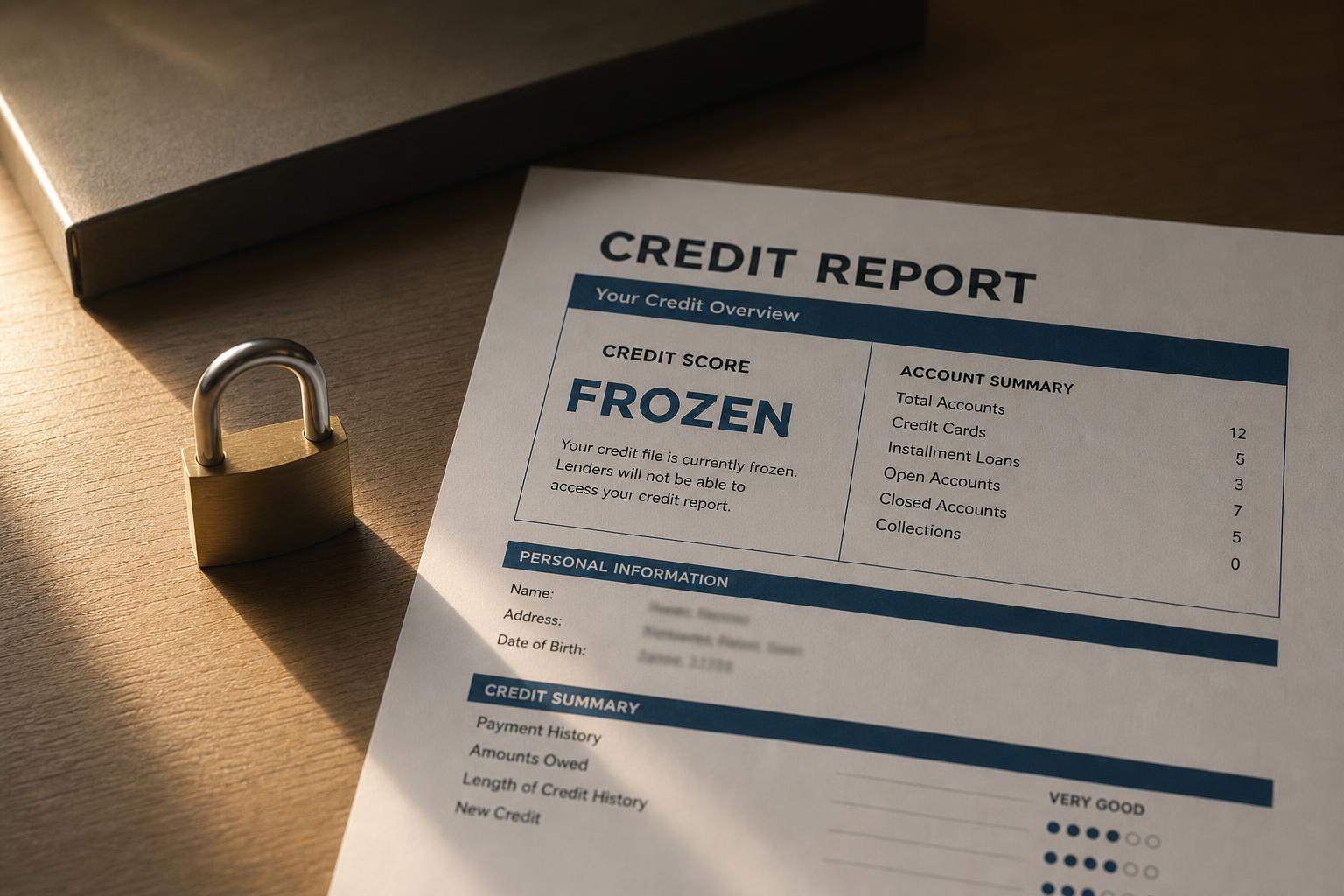
A credit freeze (or security freeze) restricts access to your credit report. Because most lenders won’t open an account without checking credit, a freeze effectively stops new accounts from being opened in your name — the gold standard for preventing new-account fraud.
Since 2018, freezing and unfreezing are free by federal law at all three bureaus. Two things to know: you must place it at each bureau separately, and when you want to apply for credit yourself, you temporarily lift it with a PIN or online and re-freeze after. It doesn’t affect your credit score, and it doesn’t touch your existing accounts.
Credit lock: a convenience product
A credit lock does much the same job as a freeze — it blocks access to your report — but it’s a product the bureaus offer, governed by their terms rather than the FCRA. The selling point is convenience: you flip it on and off instantly from an app, with no PIN.
The catches: a lock is a contractual service that may come with fees or be bundled into paid monitoring, and because it’s not the legally defined freeze, your protections rest on the provider’s terms. For most people, the free, law-backed freeze is the safer default.
Which one should you use?
A simple way to choose:
- Want the strongest protection and aren’t applying for credit often? Use a freeze — it’s free and the most effective.
- Want a lighter touch, or apply for credit frequently? A fraud alert adds verification without locking things down.
- Value instant on/off convenience and understand it’s a product? A lock may suit you — just read the terms.
Many people freeze their credit and add a fraud alert — the two can work together.
How to set each one up
Freezes and fraud alerts are placed directly with the bureaus, free, online or by phone. Our freeze your credit tool has the official links, phone numbers, and a step-by-step checklist for all three bureaus — we point you to the bureaus’ own free tools; we never do it for you. For the bigger picture on protecting yourself, see the identity-theft resources.
Key takeaways
- Fraud alert: free, light — lenders must verify your identity; place it at one bureau.
- Credit freeze: free and law-backed — blocks new accounts; place it at all three bureaus.
- Credit lock: a bureau product with instant app toggling, but governed by terms, not the FCRA.
- Freeze is the strongest free option; a fraud alert is lighter; a lock trades law-backing for convenience.
- You can combine a freeze and a fraud alert — set both up free, directly with the bureaus.
Worried your information is already exposed?
A free 15-minute review helps you understand what’s on your credit report and what protective steps make sense for your situation — no pressure, no obligation.
Free · about 15 minutes · no credit card · no obligation.
Sources: Federal Trade Commission (FTC, IdentityTheft.gov) — fraud alerts, credit freezes, and identity-theft recovery; Consumer Financial Protection Bureau (CFPB) — freezes vs. locks; Fair Credit Reporting Act (FCRA) — the free security-freeze right. Lock terms vary by provider; this is general education, not legal advice.