
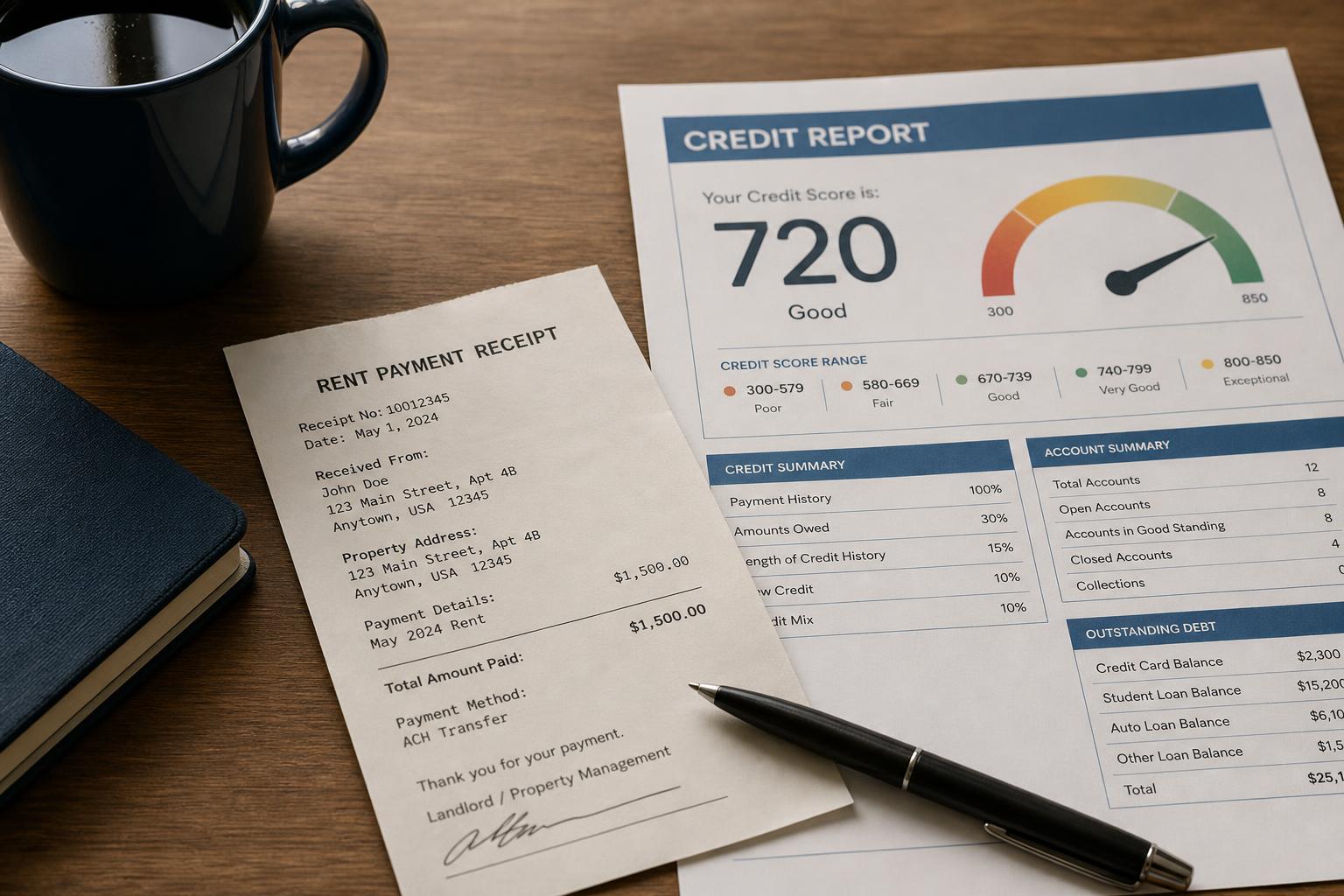
Do Apartments Report Your Rent to the Credit Bureaus?
You’ve paid rent on time for years — shouldn’t that count? Sometimes it can, but it usually doesn’t happen on its own.
Rent is most people’s biggest monthly payment, so it feels unfair that years of on-time rent often do nothing for your credit. The reason is simple: most landlords don’t report it — but that’s changing, and you have options.
Here’s how rent and credit actually connect.
Usually, no — and here’s why
Most landlords don’t report your rent payments to the credit bureaus. Reporting requires setup, data feeds, and compliance most individual landlords never bother with, and the bureaus don’t collect rent automatically. So by default, paying rent on time builds no credit history — and, importantly, an unpaid rent debt sent to collections still can hurt you.
When rent does get reported
Rent reporting does happen in some cases: large property-management companies increasingly offer it, and some leases run payments through platforms that report. If your building reports, your on-time rent can show up as positive history. It never hurts to ask your landlord or property manager whether they report.
How rent-reporting services work
If your landlord doesn’t report, third-party rent-reporting services can. They verify your payments — sometimes through your landlord, a bank connection, or payment records — and report them to one or more bureaus. Some can even add past rent. Coverage and which bureaus receive the data vary by service.
Does it actually help your score?
It can, but the effect is uneven. The benefit depends on which bureaus get the data and which scoring model a given lender uses — some newer models count rent, while many older ones ignore it. For someone with a thin file, adding positive rent history can help meaningfully; for someone with an already-deep file, the effect is smaller.

Pros, cons, and cost
Weigh it honestly:
- Pros: turns an expense you already pay into positive history; useful for thin files.
- Cons: inconsistent scoring impact; not all bureaus or models count it.
- Cost: many services charge a monthly or setup fee — check before enrolling.
Is it worth it?
If you’re building credit and the cost is modest, reporting rent can be a low-effort positive. If you already have strong, varied credit, the payoff is smaller. Either way, read the terms — confirm which bureaus receive the data and any fees — so you know what you’re actually buying.
Key takeaways
- Most landlords don’t report rent, so on-time payments usually don’t build credit automatically.
- Some large property managers and platforms do report — ask yours.
- Rent-reporting services can add your payments to the bureaus, sometimes including past rent.
- The score impact is uneven — it depends on which bureaus and scoring models count it.
- Most useful for thin files; check coverage and fees before enrolling.
Building credit as a renter?
A free 15-minute review shows where your credit stands and which steps — including rent reporting — would actually move the needle for you. No obligation.
Free · about 15 minutes · no credit card · no obligation.
Sources: Consumer Financial Protection Bureau (CFPB) — rent reporting and building credit; general bureau scoring-model differences. Service coverage and fees vary — confirm before enrolling. General education, not financial advice.