
Know your protections
Surprise Medical Bills and the No Surprises Act: What You Owe (and Don’t)
An out-of-network bill you never saw coming may not be one you actually have to pay. Since 2022, a federal law limits many surprise medical bills — here’s when you’re protected and how to push back.
Quick answer
The federal No Surprises Act, in effect since January 2022, protects you from many surprise out-of-network bills — for emergency care, and for out-of-network providers who treat you at an in-network facility — by banning “balance billing” in those situations. If you’re uninsured or self-pay, you’re entitled to a Good Faith Estimate of costs.
Knowing these rights matters because a wrongful surprise bill can end up in collections and on your credit report if you just pay it or ignore it. Often, you owe only your normal in-network cost-sharing — not the surprise balance.
What is a surprise medical bill?
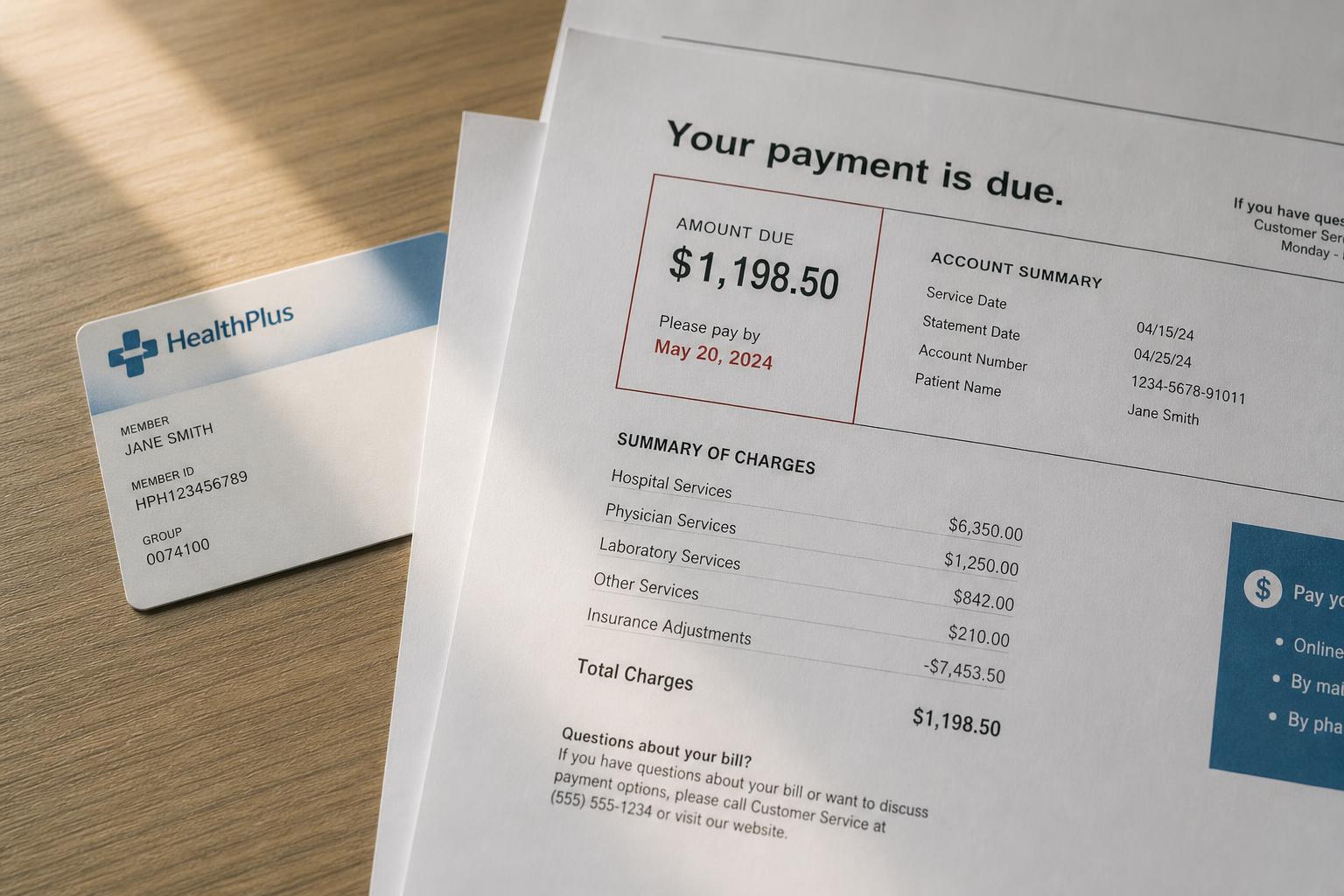
A surprise medical bill happens when you receive care from a provider outside your insurance network without realizing it, and then get billed for the difference between what your insurer paid and the provider’s higher charge. This is called balance billing. It classically happens in emergencies — you don’t choose the ER — or when an out-of-network anesthesiologist, radiologist, or assistant surgeon is involved in care at an in-network hospital. You did everything right and still got a bill you never agreed to.
What is the No Surprises Act?
The No Surprises Act is a federal law that took effect on January 1, 2022. It protects people with most types of insurance from surprise balance bills in specific situations, and gives the uninsured new cost-estimate rights. In the situations it covers, you generally can’t be charged more than your normal in-network cost-sharing — the out-of-network provider has to work out the rest with your insurer, not bill you for it.
When are you protected from a surprise bill?
The law’s core protections apply in these situations:

Emergency care
If you have an emergency and go to an out-of-network facility or are treated by out-of-network providers, you’re generally protected from balance billing — you owe only your in-network cost-sharing.
Non-emergency care at an in-network facility
When you go to an in-network hospital or surgical center but are treated by an out-of-network provider there (anesthesiology, radiology, pathology, assistant surgeon, and similar), you’re generally protected.
Air ambulance
The law also covers out-of-network air ambulance services. Note it generally does not cover ground ambulance — a known gap.
What does “balance billing” mean, and when is it banned?
Balance billing is when an out-of-network provider bills you for the gap between their charge and what your insurer reimbursed. In the protected situations above, the No Surprises Act bans it — you can only be charged the in-network amount you’d normally owe, and the provider and insurer settle the rest between themselves. Outside those situations (for example, care you knowingly chose to get out-of-network), balance billing may still be allowed, so the context matters.
What is a Good Faith Estimate (for the uninsured)?
If you’re uninsured or paying out of pocket, the No Surprises Act gives you the right to a Good Faith Estimate of expected charges before scheduled care. If your final bill ends up substantially higher than the estimate — generally $400 or more above it — you may be able to dispute the bill through a patient-provider dispute resolution process. Ask for the estimate in advance and keep it; it’s your benchmark.
What isn’t covered by the No Surprises Act?
The protections are powerful but not unlimited. Notable gaps and exceptions include ground ambulance services (often still able to balance bill), and situations where you knowingly and voluntarily chose an out-of-network provider and signed a valid consent waiving the protections for non-emergency care. Be very cautious about signing any form that asks you to waive No Surprises Act rights — for emergencies and many facility-based providers, you can’t be asked to waive them at all.
How do you dispute a surprise medical bill?
If you think a bill violates the No Surprises Act:
- Don’t pay the disputed balance right away — paying can complicate getting it corrected.
- Contact the provider’s billing office and your insurer to flag that it appears to be a protected surprise bill.
- File a complaint with the federal No Surprises Help Desk (run by CMS) if it isn’t resolved; there’s a formal process and a phone line.
- For the uninsured, use the patient-provider dispute resolution process if the bill exceeds your Good Faith Estimate.
Keep records of the bill, your insurance EOB, and any estimates — they’re your evidence.
What if a surprise bill already went to collections or your report?
A bill that should have been covered by the No Surprises Act can still wrongly end up in collections. If that happens, dispute it — both with the collector (you have FDCPA rights) and, if it’s on your credit report, with the bureaus, since you can dispute inaccurate items under the FCRA. The medical-collection reporting rules may also mean it shouldn’t be there at all. A wrongful surprise bill is exactly the kind of inaccurate item worth challenging rather than paying.
Handling a surprise bill
The law is on your side in covered situations — use it before you pay.
Do
Don’t
Surprise-bill red flags
Watch for attempts to bill you for something the law may not allow:
Red flags
The bottom line on surprise bills
The No Surprises Act means many out-of-network bills aren’t yours to pay — especially after emergencies and at in-network facilities. Before you pay a surprise bill, check whether it’s a protected situation, compare it to your EOB, and dispute it through the proper channels. Don’t let a bill the law limits quietly become a collection on your credit report.
Key takeaways
Before you pay or settle a medical bill, confirm what’s actually reporting. A free 15-minute review shows what may be inaccurate, outdated, or disputable — before you act. See the free medical-debt review →
Don’t let a wrongful bill reach your credit
A free 15-minute review shows what medical items are on your credit report and what may be inaccurate or disputable — so a surprise bill the law limits doesn’t quietly become a collection.
Find Out Why I Was DeniedNo credit card · phone optional · no obligation.