
Medical debt & credit
How to Get Medical Collections Removed From Your Credit Report
There’s no magic delete button — but there are several legitimate paths to getting a medical collection off your report. Here’s what actually works, and what’s realistic.
Quick answer
A medical collection can come off your credit report when it’s inaccurate, already paid, under $500, or shouldn’t be reporting yet — through a dispute under the Fair Credit Reporting Act, or because the credit bureaus’ own medical-debt rules already disqualify it.
What no one can honestly promise is the removal of an accurate, current debt simply because it’s inconvenient. The realistic goal is to find what doesn’t belong and challenge that — which, with medical billing, is often more than you’d expect.
Medical bills in collections? A free 15-minute review shows what’s actually reporting — and what may be inaccurate or disputable.
No credit card · phone optional · no obligation.
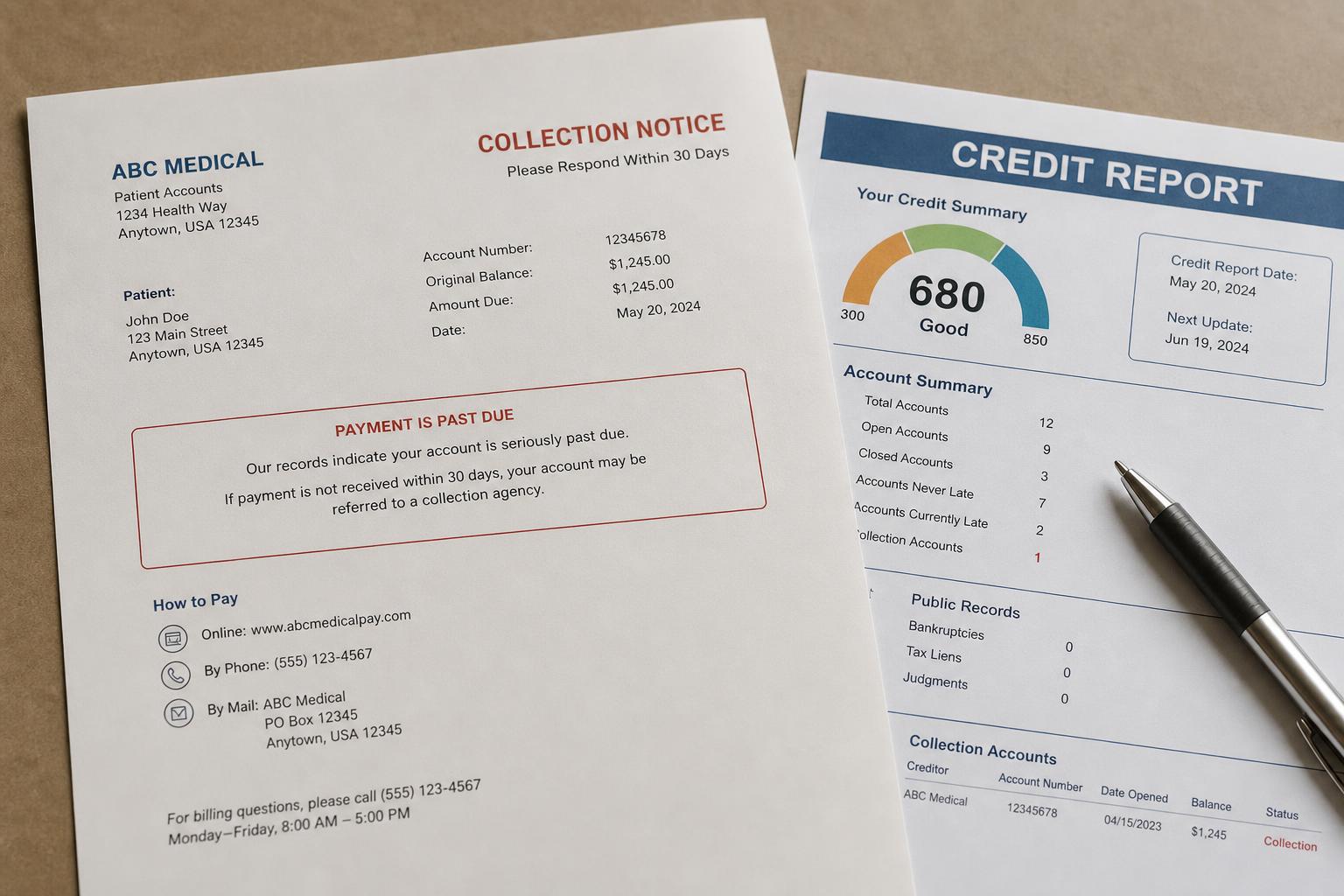
Can medical collections be removed from your credit report?
Often, yes — in specific situations. A medical collection can be removed when it’s reporting in error, when you’ve paid it, when it’s under the $500 threshold the bureaus no longer include, or when it appeared before the one-year waiting period. What you can’t do is force the deletion of an accurate, current debt just because it’s hurting your score. Be wary of anyone who guarantees otherwise.
Step 1: Check what’s actually reporting
Pull your reports from all three bureaus and find every medical collection. Then compare each against your insurance explanation of benefits (EOB) and the provider’s itemized bill. Medical billing errors are common — wrong amounts, duplicate accounts, bills that insurance should have covered, or balances you already paid.
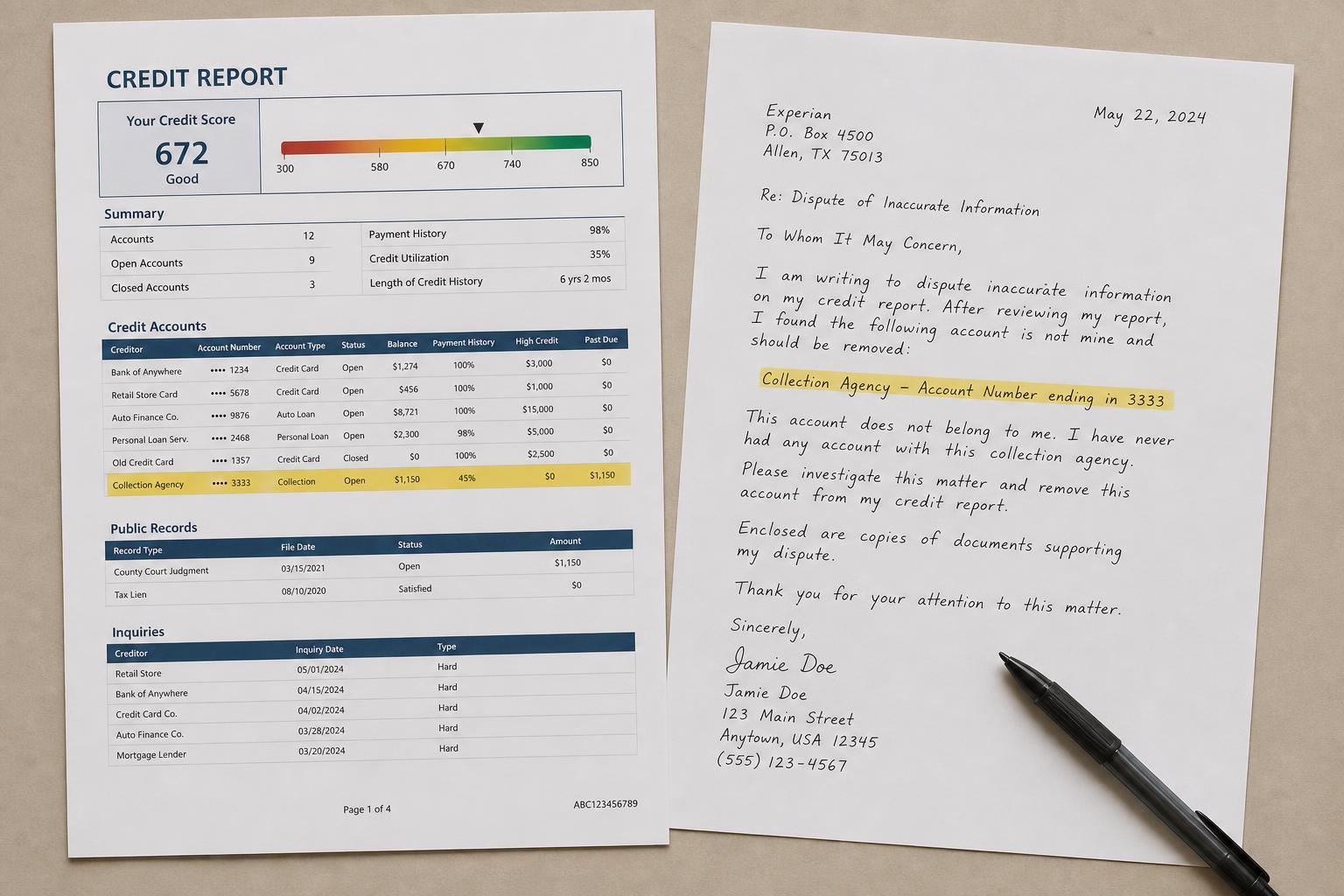
Step 2: Dispute inaccurate medical collections
If something is wrong, you have the right under the FCRA to dispute it with the credit bureaus, who must investigate. Common, winnable disputes include a balance that’s incorrect, a debt that’s already paid, a duplicate, an amount insurance should have covered, or an account that isn’t yours. Keep copies and document everything.
Step 3: See if the bureau rules already apply
Before you do anything else, check whether the collection should even be there. If it’s paid, under $500, or appeared within a year of going unpaid, the bureaus’ own rules say it shouldn’t be on your report — and a collection still showing despite that is a straightforward dispute.
Step 4: Request debt validation
If a collector is reporting a debt you don’t recognize, you can request validation under the Fair Debt Collection Practices Act (FDCPA). The collector must verify the debt is yours and accurate. If they can’t properly validate it, it shouldn’t continue to be reported.
What about pay-for-delete?
Pay-for-delete — paying a collector in exchange for removing the entry — is sometimes suggested, but it’s unreliable and often unnecessary for medical debt (since paid medical collections come off anyway). We cover the catches in Pay for Delete on Medical Collections: the Risks.
Does HIPAA remove medical collections?
Despite what “HIPAA dispute” templates claim, HIPAA generally won’t get an accurate collection deleted — it’s a privacy law, not a credit-reporting one. We unpack that myth in HIPAA and Medical Collections: the Truth so you don’t waste time on it.
How long until it’s gone if the debt is accurate?
If a medical collection is valid and doesn’t qualify for removal under the bureau rules, it can report for up to seven years from the original delinquency. Paying it should prompt removal under current policy; otherwise, time and accuracy are your levers — not a guaranteed shortcut.
How long does a medical collection dispute take?
Once you file a dispute, the credit bureau generally has about 30 days to investigate and respond (sometimes a little longer if you send more information mid-investigation). If the item is corrected or can’t be verified, it’s removed or updated; if it’s verified, it stays and you’ll get an explanation. Keep copies of everything you send, and check all three bureaus — a correction at one doesn’t automatically happen at the others.
What if the collector verifies the debt?
A verified debt isn’t necessarily the end of the road. You can re-dispute with new evidence (an EOB, proof of payment, or proof it isn’t yours), ask the bureau for the method of verification it used, add a brief statement to your file, or file a complaint with the Consumer Financial Protection Bureau. And the bureau rules still apply — if the verified collection is paid or under $500, it shouldn’t be reporting regardless of whether the underlying debt was valid.
Removing medical collections: do’s and don’ts
Do
Don’t
The honest bottom line
The fastest wins with medical collections come from accuracy: errors you can dispute, and items the bureaus’ rules already say shouldn’t be there. Beyond that, no one can ethically promise to erase a legitimate debt — but with medical billing, more is challengeable than most people realize.
Key takeaways
Before you pay or settle a medical bill, confirm what’s actually reporting. A free 15-minute review shows what may be inaccurate, outdated, or disputable — before you act. See the free medical-debt review →
Find out what doesn’t belong — free
A free 15-minute review helps you see what medical collections are reporting and what may be inaccurate or disputable — so you challenge the right things.
Find Out Why I Was DeniedNo credit card · phone optional · no obligation.