
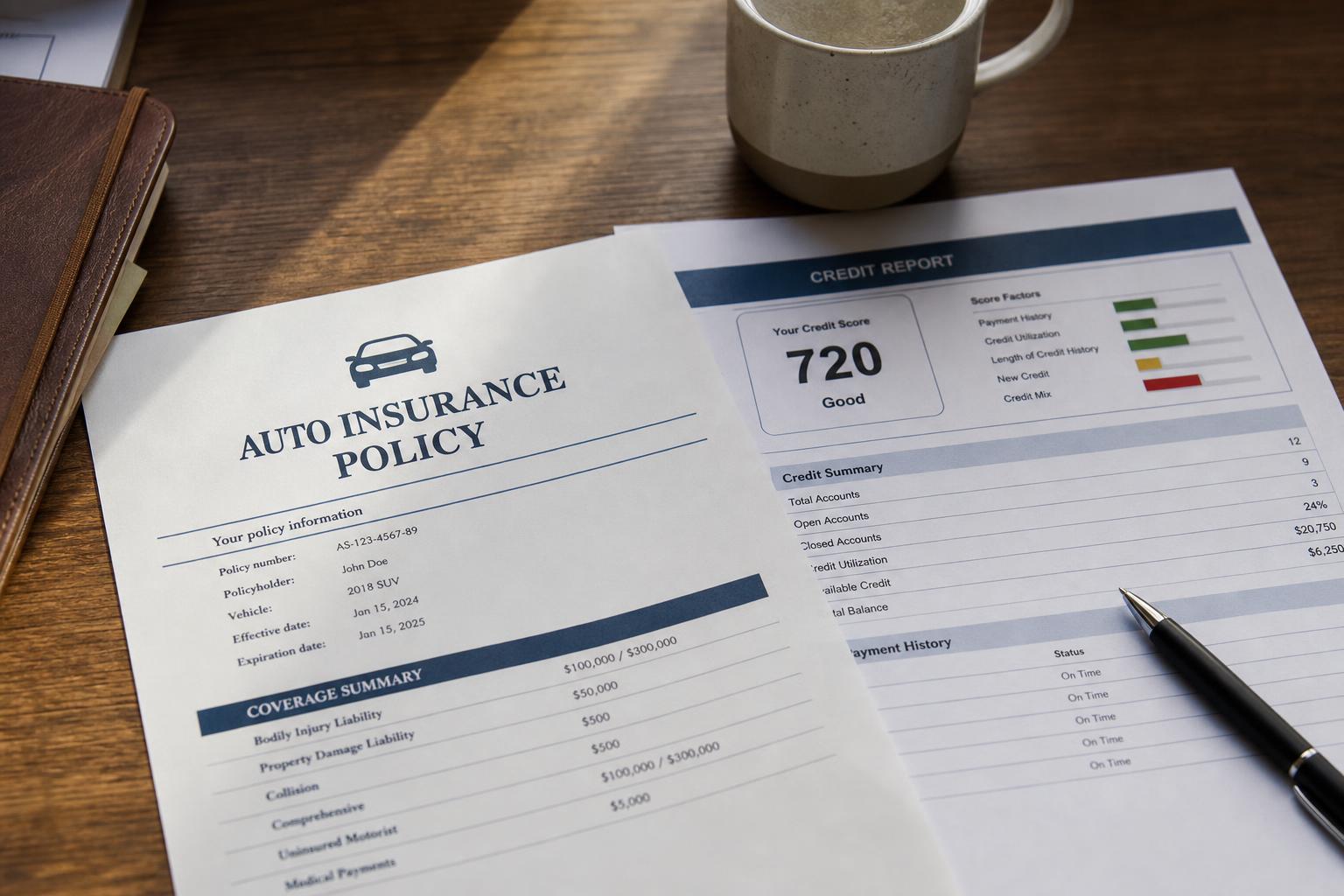
What Is a Credit-Based Insurance Score?
Your credit can affect your insurance premium — through a number most people have never heard of. Here’s what a credit-based insurance score is, and what you can do about it.
If your car or home insurance rate climbed and you couldn’t figure out why, your credit may be part of the answer. In most states, insurers use a credit-based insurance score as one factor in pricing — and it’s not the same thing as the credit score you already know.
Here’s what it is, why it exists, and how to influence it.
What it is — and how it differs from a credit score
A regular credit score predicts how likely you are to repay debt. A credit-based insurance score predicts something different: how likely you are to file an insurance claim that costs the insurer money. The two are calculated from similar credit-report information but built for different purposes, so they don’t match and aren’t interchangeable.
You can have a strong credit score and a middling insurance score, or vice versa, because each model weighs the data its own way.
Why insurers use it
Insurers adopted these scores because their actuarial studies — and a well-known Federal Trade Commission report — found a statistical correlation between credit-based insurance scores and the likelihood and cost of claims. To an insurer, that makes it a pricing signal. It’s also controversial, because critics argue it can penalize people for financial hardship unrelated to how they drive or maintain a home — which is exactly why some states restrict it.
What goes into it
A credit-based insurance score draws on familiar credit-report categories, weighted for claims prediction rather than repayment:
- Payment history (late payments, collections)
- Outstanding debt and how much credit you’re using
- Length of credit history
- Pursuit of new credit (recent applications)
- Credit mix
What it does not include is just as important: your income, race, religion, national origin, and similar characteristics aren’t part of it. Improving the underlying credit is the lever you actually control (start with how credit scores work).
Which states limit or ban it
Use of credit-based insurance scores is regulated at the state level, and the rules vary a lot. A few states — such as California, Hawaii, and Massachusetts — bar or sharply limit it for auto insurance, and others place conditions on how and when insurers may use it. Because this is state-specific and changes, the reliable move is to check your own state’s department of insurance for the current rule where you live.

How to improve the credit behind it
Since the score is built from your credit, the same habits that strengthen a credit score generally help here too:
- Pay every bill on time — payment history matters most.
- Lower your card balances to reduce utilization.
- Avoid a flurry of new credit applications right before shopping for insurance.
- Dispute genuine errors on your credit report.
Improvements take time to filter through, so this is a longer-game lever, not an overnight fix.
What you can do about your rate now
Beyond your credit, you have immediate options: shop and compare (insurers weigh credit differently, so quotes vary), ask whether your state limits the credit factor, request available discounts, and revisit coverage and deductibles. If your rate jumped without an at-fault claim, our guide on why your car insurance rate keeps going up covers the usual culprits.
Key takeaways
- A credit-based insurance score predicts claim risk — it’s not your credit score.
- Insurers use it because studies link it to the likelihood and cost of claims.
- It draws on credit-report data (payment history, debt, history length) but not income or protected traits.
- Some states (e.g., California, Hawaii, Massachusetts) limit or ban it — check your state.
- Improving the underlying credit helps over time; shopping around helps right now.
See the credit behind your insurance score
A free 15-minute review walks through what’s on your credit report — the same information that feeds your insurance score — and what may be worth addressing.
Free · about 15 minutes · no credit card · no obligation.
Sources: National Association of Insurance Commissioners (NAIC) — credit-based insurance scoring and state regulation; Federal Trade Commission (FTC) — report on credit-based insurance scores; Consumer Financial Protection Bureau (CFPB) — how credit information is used. State rules vary and change — verify with your state insurance department. General education, not financial or legal advice.