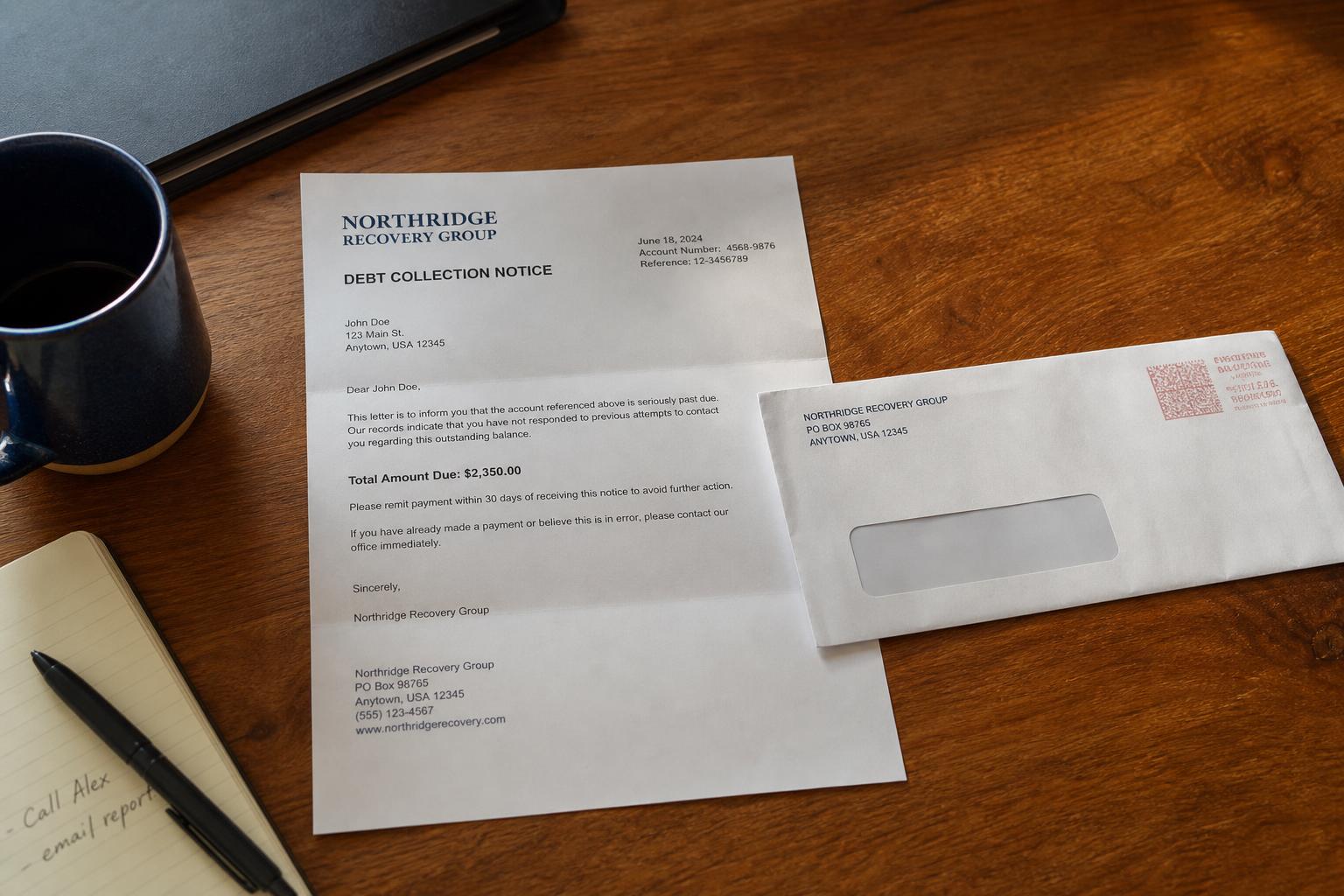
What Is a Collection Account on Your Credit Report?
A collection account is one of the more damaging things on a credit report — but it also comes with real rights most people don’t know they have.
A collection account shows up when a debt you didn’t pay gets handed off to someone whose whole job is collecting it. It’s a serious mark — but it’s also one where you have more leverage than you might expect.
Here’s what a collection account is, how it works, and what to do about it.
How a debt becomes a collection
When an original creditor gives up on collecting a past-due account, they either hire a collection agency or sell the debt to a debt buyer for a fraction of its value. Either way, a new collection account can appear on your credit report under the collector’s name — often alongside the original account, now marked as charged off.
How it affects your credit
A collection is a major derogatory mark and can stay on your report for about seven years from the original delinquency date — not from when the collector got it. Its impact is heaviest at first and fades over time. Whether paying it helps depends on the scoring model; see does paying a collection help your credit.
Your rights with a collector
Collectors are governed by the Fair Debt Collection Practices Act (FDCPA). You have the right to debt validation — written proof the debt is yours and the amount is correct — and collectors can’t harass you, call at unreasonable hours, or lie. Because debts are bought and sold in bulk, requesting validation is a genuinely useful first move.
What to check — and watch for
Review the collection’s details: the original delinquency date, the balance, the original creditor, and whether the debt is also listed as a charge-off. Watch for illegal re-aging (a reset date on an old debt) and for medical collections, which have their own, more forgiving rules. Anything inaccurate is disputable — see how to handle a collection.
Key takeaways
- A collection account appears when an unpaid debt is sent to or sold to a collector.
- It stays ~7 years from the original delinquency date and is a serious mark that fades over time.
- The FDCPA gives you the right to debt validation and protection from harassment.
- Check the dates and balance, and watch for illegal re-aging on old debts.
- Medical collections have more forgiving rules; anything inaccurate can be disputed.
See what a collection is doing to your credit — free
A free 15-minute review shows what’s reporting on a collection — the dates, the balance, and what may be inaccurate or disputable. No obligation.
Free · about 15 minutes · no credit card · no obligation.
Sources: Fair Debt Collection Practices Act (FDCPA) — debt validation and collector conduct; Fair Credit Reporting Act (FCRA) — the seven-year limit and disputes; Consumer Financial Protection Bureau (CFPB) — collections and your rights. This is general education, not legal advice.