Will Paying a Charge-Off Remove It From Your Credit?
It’s the natural assumption — pay it off and it disappears. That’s not how charge-offs work, but paying still isn’t pointless.
If you’ve got a charge-off on your report, paying it feels like it should make it go away. It won’t — at least not on its own. But that doesn’t mean paying is a waste.
Here’s what paying a charge-off actually does, and how to decide whether it’s worth it.
Paying doesn’t delete the charge-off
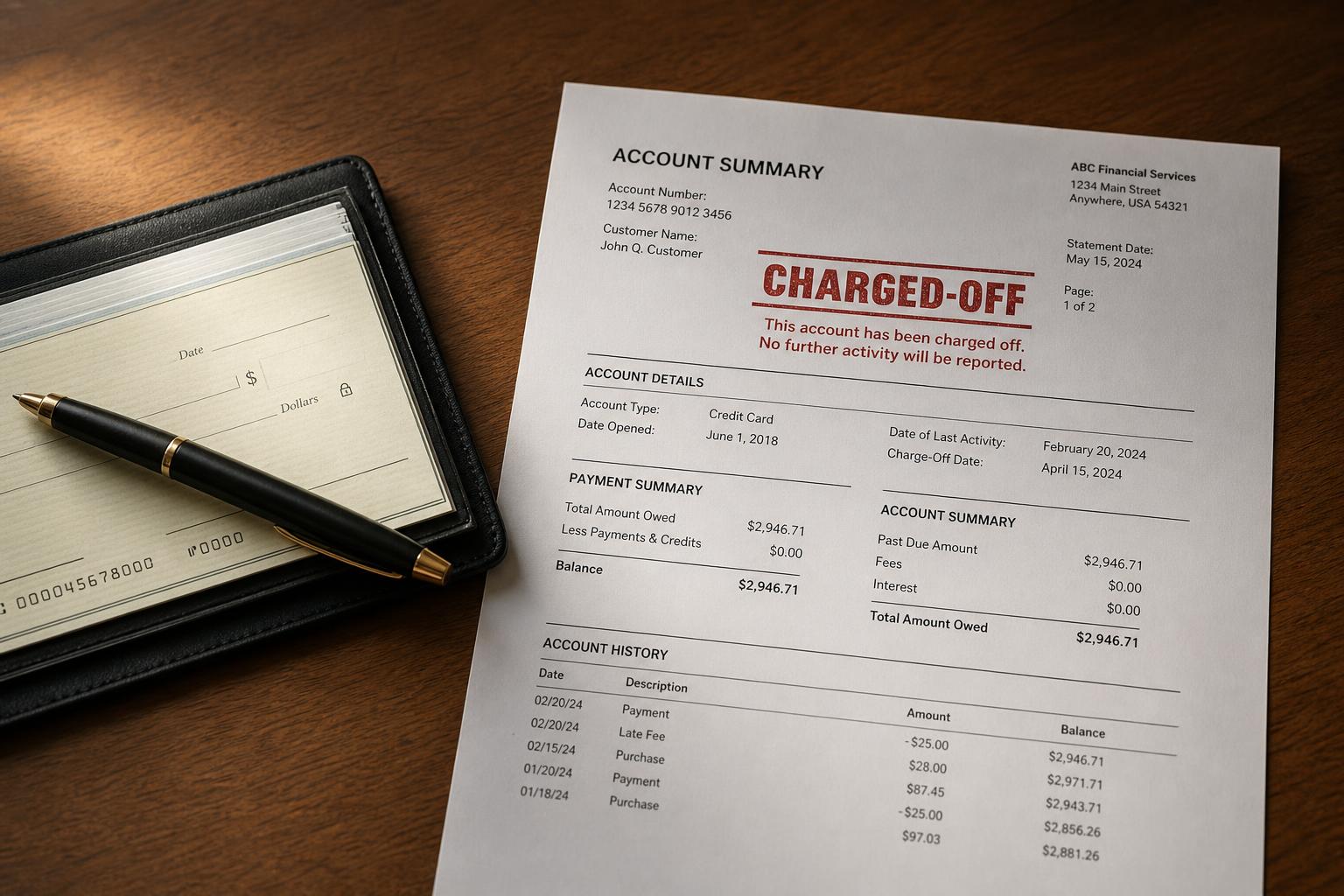
A charge-off stays on your credit report for about seven years from the original delinquency date, whether you pay it or not. Paying doesn’t reset that clock or erase the entry. What it does is update the status from an unpaid charge-off to a paid one.
Why “paid” can still help
That status change isn’t nothing. Newer credit-scoring models often weigh a paid charge-off more favorably than an unpaid one, and a lender manually reviewing your file generally prefers to see “paid.” Older scoring models may not distinguish — so the benefit depends on who’s looking.
What about pay-for-delete?
Sometimes a collector will agree to pay-for-delete — removing the entry in exchange for payment. It’s worth asking, but many won’t do it, and any promise is only good if you get it in writing before you pay. Never rely on a verbal deal. More in how to remove a charge-off.
Check these before you pay
Before sending money, confirm the debt is actually yours and accurate — the balance, the dates, and whether it’s also listed as a separate collection. On very old debts, be aware that paying can sometimes restart your state’s statute of limitations. And if the charge-off is inaccurate, disputing it is the better route.
Key takeaways
- Paying a charge-off doesn’t remove it — it stays ~7 years but updates to “paid.”
- A paid charge-off is treated more favorably by newer scoring models (not always by older ones).
- Pay-for-delete is worth asking about — but only if you get it in writing.
- Confirm the debt is accurate and yours before paying; dispute it if it isn’t.
- On old debts, paying can restart the statute of limitations — know your dates.
Decide with the full picture — free
A free 15-minute review shows what’s on your report and whether a charge-off is accurate — so you can decide whether paying makes sense. No obligation.
Free · about 15 minutes · no credit card · no obligation.
Sources: Consumer Financial Protection Bureau (CFPB) — charge-offs, paying collections, and scoring models; Fair Credit Reporting Act (FCRA) — disputing inaccurate information. Statutes of limitation vary by state. This is general education, not legal advice.