
Renting with collections
Can You Rent an Apartment With Collections on Your Credit?
Yes, you can be approved for an apartment with collections. The result depends on the property’s written screening rules, what kind of account is reporting, whether the information is accurate, and what the rest of the application shows.
Quick answer
Illustrative example: The apartment rents for $1,500. Its written criteria require gross monthly income equal to three times the rent, so the income threshold is $4,500. An applicant earns $4,900 a month, has 18 months of on-time rent, and sees a $420 utility collection from two years ago.
The income test is clear. The collection is not. Before paying an application fee, the applicant needs two answers: Does this property disqualify an unpaid utility collection, and is the $420 account reported correctly?
Paying first is not a safe shortcut. Payment may change the account’s status, but it does not guarantee deletion, rental approval, or a particular credit-score result. If the balance or ownership is wrong, document and dispute the error instead of paying solely to make the application move faster.
The example above is illustrative. It is not a client story or an approval prediction.
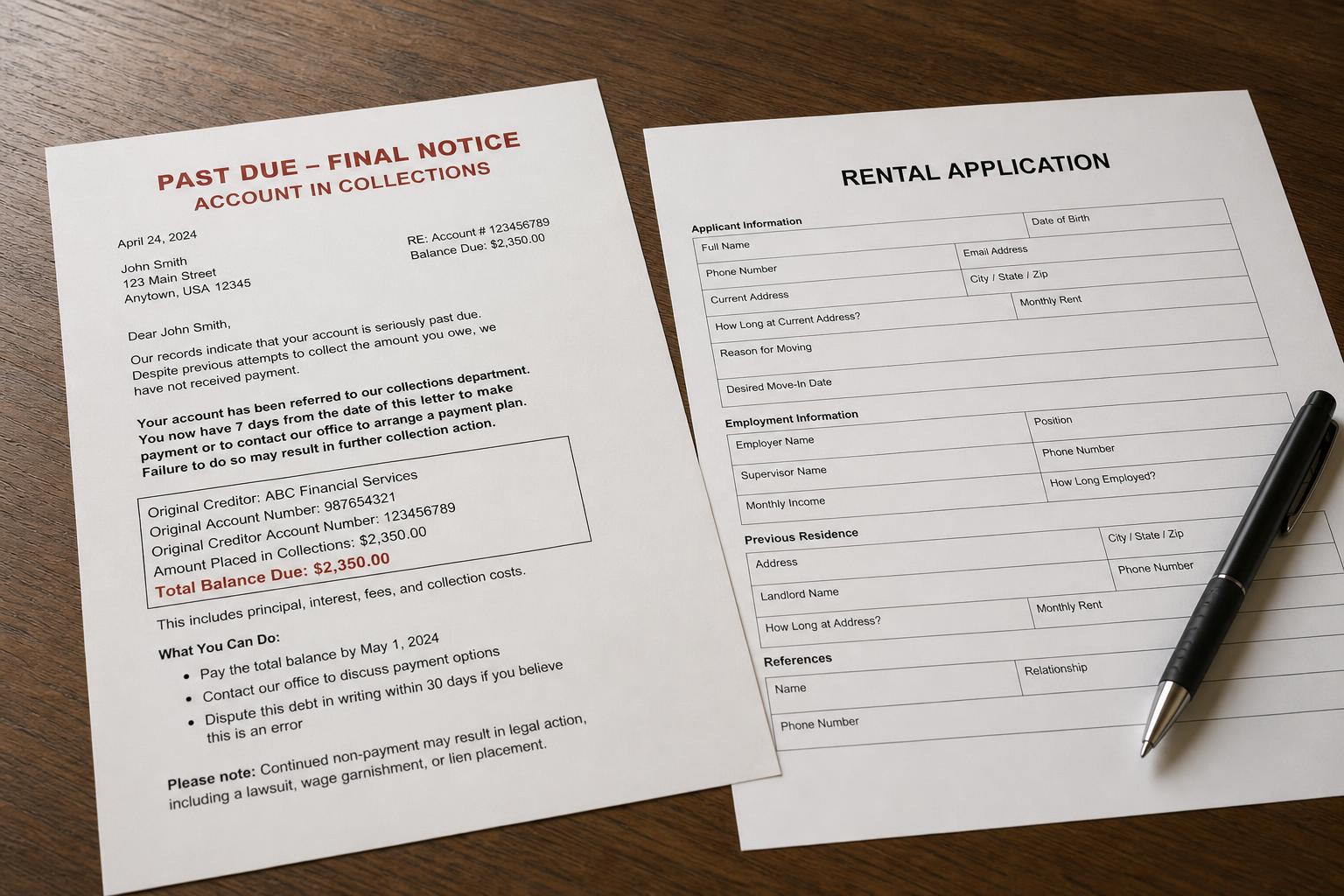
Ask for the screening rules before you pay an application fee
Start with the property, not the collection agency. The Federal Trade Commission advises rental applicants to ask what information a landlord uses before paying an application or background-check fee. A property may use a credit report, a tenant-screening report, references, income documents, or a screening vendor’s score or recommendation. The decision rules vary.
Ask the leasing office or landlord:
- Which tenant-screening company do you use?
- Do your written criteria disqualify unpaid rent, landlord debt, or lease-damage collections?
- How do you treat utility, medical, phone, retail, and other non-rental collections?
- Is there an amount or age threshold?
- Does paid or settled status change the decision?
- What income calculation and documents do you require?
- If one criterion is not met, do you allow a guarantor, documented reserves, or an additional deposit where lawful?
- What is the application-fee and refund policy?
Get the answers in writing when possible. “You should be fine” is not a screening standard.
Do not pay to discover a hard disqualifier the property could have told you about first. A second chance apartment may evaluate a broader set of documents, but the label does not tell you what will be approved or what it will cost. Ask for that property’s rules too.
Before abandoning screened rentals altogether, compare the trade-offs in No Credit Check Apartments: How They Work and What They Really Cost.
Find the collection in the reports the property may use
A credit report and a tenant-screening report are not the same file. Tenant-screening reports may combine credit information with rental history, eviction or housing-court records, employment verification, criminal-history data, and a score or recommendation generated for the landlord. A former-landlord balance may appear as a collection, as rental-history information, or in more than one place.
Review your credit reports from Equifax, Experian, and TransUnion through AnnualCreditReport.com. The three nationwide credit reporting companies make a free online report available once a week. Checking your own report does not lower your credit score.
If you are worried about the application itself, see whether an apartment denial hurts your credit.
For a tenant-screening report, ask the property which company it uses. The Consumer Financial Protection Bureau maintains a list of consumer reporting companies with instructions for requesting reports from specialty companies.
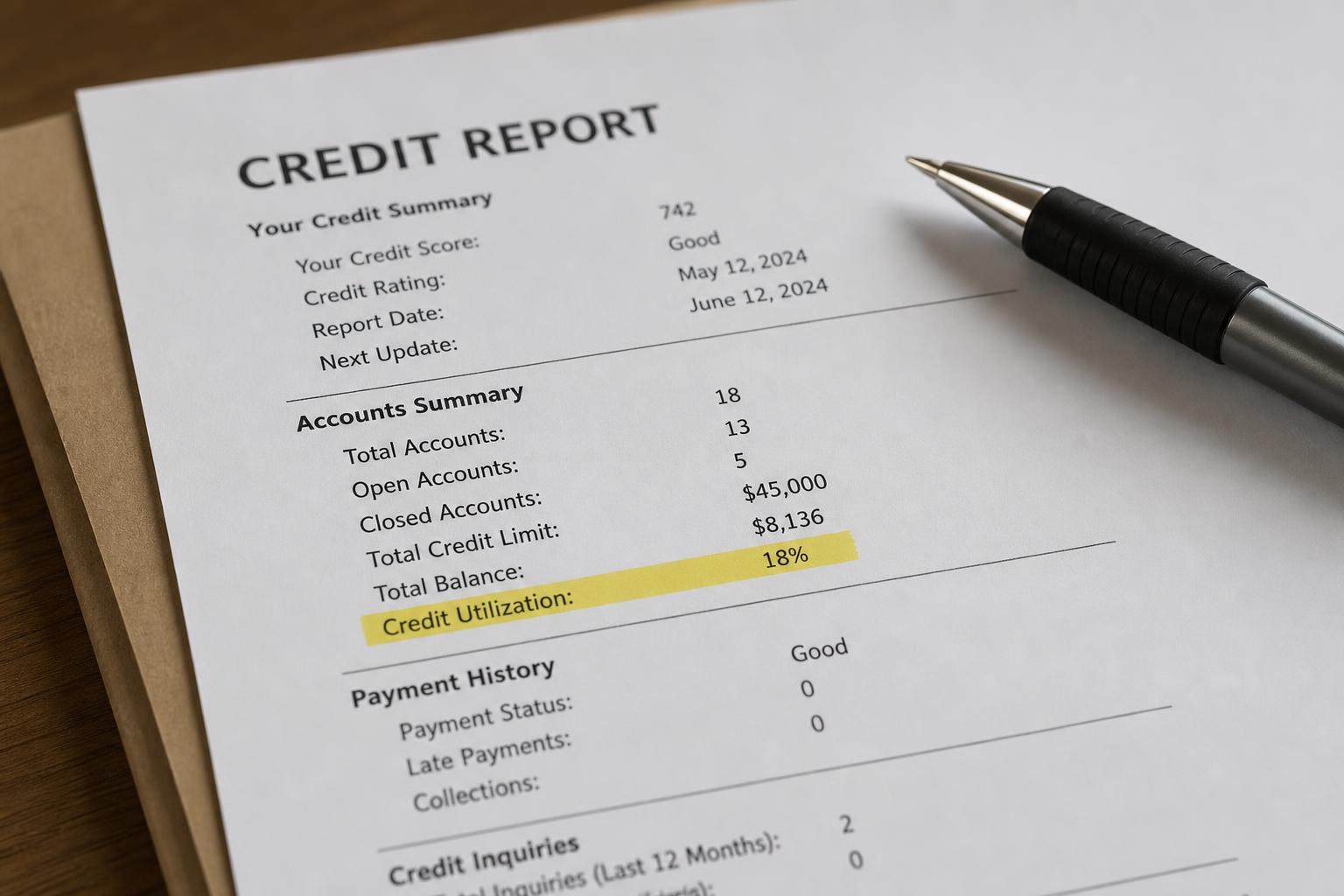
For each collection, verify:
- Your name and identifying information.
- The original creditor and the company now collecting.
- The current balance and whether payments or credits are missing.
- The account status, including whether it should show paid or settled.
- The reported dates.
- Whether the same debt appears more than once.
- Whether the account resulted from identity theft or belongs to someone else.
A collection can belong to you and still be wrong in amount, status, or dates. Compare the report with the lease, account statements, payment receipts, move-out records, and correspondence you already have.
Match the next step to the account
The account type changes the question. A former-landlord balance speaks directly to rental history, so ask whether unresolved housing debt is a disqualifier and whether paid or settled status changes the result. Some policies treat a utility account as housing-related because it concerns a recurring household bill. Medical, phone, retail, credit-card, and other collections depend on the property’s stated type, amount, and recency rules.
Do not assume a medical collection will be ignored or a utility collection will cause an automatic denial. The property policy and the actual report answer those questions.
| What the report shows | Practical next step | Do not assume |
|---|---|---|
| The account is not yours, is duplicated, has the wrong balance, or has the wrong status | Dispute the specific error with the consumer reporting company and the company that furnished the information. Send copies of supporting documents and keep a complete record. | A phone call to the collector will correct every report. |
| A third-party collector contacted you about an account you do not recognize | Request the validation information and compare it with the report. If you dispute the debt, send the dispute in writing before the notice deadline. | Urgency, threats, or caller ID prove the debt is valid. |
| The account is an accurate former-landlord balance | Review the lease, ledger, deposit accounting, and move-out documents. Ask the prospective property what resolution it requires. If you negotiate, get the terms in writing before paying. | Payment automatically deletes the account or guarantees approval. |
| The account is accurate but is not housing-related | Ask how the property’s written criteria treat that account before deciding whether payment, settlement, or documentation would help the application. | Every landlord weighs the same collection the same way. |
| The debt is old | Separate the credit-reporting period from the statute of limitations for a lawsuit. State law and debt type control the limitations period. Get state-specific legal guidance before making a payment or acknowledgment if you are unsure. | “Seven years” is one universal expiration date for the debt. |
Credit reporting and debt enforceability run on different clocks. Credit reporting companies can generally report most negative payment-history information for up to seven years. A state’s statute of limitations for filing a collection lawsuit may be shorter or longer, and a payment or acknowledgment can affect that period in some states.
Accurate, current negative information generally cannot be removed simply because it hurts a rental application. Information that is inaccurate or incomplete may be disputable, and whether paying a collection helps depends on what is reporting and who is reading it. Results, reporting updates, and screening decisions vary.
Before you send money to a collector
Before paying a collector, get validation information identifying the collector, the creditor, the amount, and your dispute rights. In general, a covered debt collector must provide that information during the first communication or within five days.
Signs a debt collector may be fake
Under federal rules, a written dispute sent within the stated 30-day validation period generally requires a covered debt collector to stop collection until it sends verification. A phone argument does not trigger the same rule. Keep copies and proof of delivery.
Treat former-landlord debt as its own problem
A balance claimed by a former landlord deserves more work because it relates directly to a new rental decision. It can include unpaid rent, early-termination charges, repairs, utilities billed through the property, or other lease charges. The total on a collection account should trace back to actual documents.
Gather the lease, payment ledger, move-in and move-out condition records, security-deposit accounting, notices, receipts, and emails. Reconcile the amount line by line. Look for a payment that was not credited, a charge that does not match the lease, a deposit that was not applied, or a balance that belongs to another tenant.
A landlord collection and an eviction record are separate items. One can appear without the other. Check the tenant-screening report for both, including the final status of any court case. If a case was dismissed, the report should say so.
If the balance is valid and you decide to resolve it, the written agreement should identify the account, the amount accepted, the deadline, whether the payment satisfies the remaining balance, and how the collector or creditor says it will update the account. Keep the agreement and proof of payment. Do not rely on a verbal promise about deletion or reporting.
If the amount is disputed, state the specific reason and attach the strongest document. “This is unfair” gives a leasing manager nothing to evaluate. “The ledger omits my payment dated [date]; the receipt and bank record are attached” identifies the issue.
Landlord-tenant and security-deposit rules vary by state and locality. A housing attorney or local legal-aid organization can review a disputed former-landlord balance when the documents or deadlines are unclear.
Build a rental file that answers the next question
A useful application package is not a stack of generic character letters. It is a compact set of documents tied to the property’s stated criteria.
Include only what is relevant:
- The income documents the property requests.
- A recent rent ledger or receipts showing your current payment history.
- A prior-landlord reference with verifiable contact information.
- A dispute confirmation, corrected report, settlement letter, or payment receipt for the collection.
- Guarantor documents if the property allows a guarantor.
- Proof of funds or reserves only when requested and when you are comfortable providing it securely.
For the illustrative applicant above, a one-page cover sheet could read:
| Application fact | Documented position |
|---|---|
| Proposed rent | $1,500 per month |
| Gross monthly income | $4,900 |
| Income-to-rent ratio | 3.27× |
| Current rental record | On time for 18 months |
| Collection | $420 utility account; status and supporting document attached |
This does not promise approval. It lets the decision-maker compare the application with the written policy without hunting through unrelated paperwork.
Explain the collection in a few factual sentences
Use the explanation to identify the account, its current status, and the attached proof. Do not write a life story or make a claim you cannot document.
My screening report lists a collection from [original creditor or collector] for [$ amount], dated [month/year]. [The balance was paid or settled on date / I disputed the specific error on date / the account remains open.] I attached [receipt, settlement letter, dispute confirmation, corrected report, or other document]. My current gross monthly income is [$ amount], and my rent has been paid on time since [month/year]. Please evaluate the application under your written screening criteria and let me know whether another document is required.
Use only statements that are true. If the collection involves medical care, you can identify it as a medical billing account without disclosing a diagnosis or other health details. If the account is disputed, say what field is wrong and when the dispute was sent. Do not say it is “being removed” unless you have written confirmation that supports that statement.
If the property denies you or changes the terms, get the report
A denial is not the only decision covered by the Fair Credit Reporting Act. When information in a consumer report contributes to a landlord’s decision to deny the application, charge higher rent, require a larger deposit, or require a co-signer, the landlord must provide an adverse-action notice.
The notice must identify the consumer reporting company and explain your right to dispute inaccurate information and request a free copy of the report. Request that copy within 60 days of the notice. The reporting company did not make the rental decision, but its report shows the information the landlord received.
Then:
- Save the notice and the date you received it.
- Request the complete report from the company named in the notice.
- Compare it with your records and identify each specific error.
- Dispute inaccurate or incomplete information with the reporting company and the source that furnished it.
- Ask the property whether it will reconsider after a correction. Reconsideration is not guaranteed, and the unit may no longer be available.
If the landlord says a screening report affected the decision but does not provide the notice, ask in writing for the screening company’s name and the required adverse-action information.
Key takeaways
- FTC: Tenant Background Checks and Your Rights
- FTC: Using Consumer Reports — What Landlords Need to Know
- CFPB: What Is a Tenant Screening Report?
- CFPB: Review Your Rental Background Check
- CFPB: List of Consumer Reporting Companies
- FTC: Free Credit Reports
- CFPB: How Do I Dispute an Error on My Credit Report?
- CFPB: How Long Does Information Stay on My Credit Report?
- CFPB: Can Debt Collectors Collect a Debt That’s Several Years Old?
- FTC: Debt Collection FAQs
See what’s really on your report — free
A free 15-minute review shows what collections are reporting, what may be inaccurate or disputable, and how to apply with confidence — before your next rental application.
Find Out Why I Was DeniedNo credit card · phone optional · no obligation.