Does Student Loan Forbearance Hurt Your Credit?
Pausing your student-loan payments the right way shouldn’t hurt your credit — but a common reporting error can make it look like it did.
If you can’t make your student-loan payments, forbearance and deferment let you pause them — and, done properly, they don’t damage your credit the way simply not paying would.
Here’s how they affect your credit, and the reporting mistake to watch for.
Forbearance and deferment don’t hurt your credit — by themselves
An approved forbearance or deferment is a legitimate, agreed-upon pause. During it, your account should be reported as current (or as deferred) — not as late or delinquent. So the pause itself shouldn’t drop your score. What hurts your credit is missed payments without an approved pause in place.
Deferment vs. forbearance (quick version)
Both pause payments, with one key difference: on subsidized federal loans, deferment usually means the government covers the interest, while during forbearance interest keeps building and gets added to your balance. Neither is reported as a negative — but forbearance can cost you more over time.
The error to watch for
Here’s the catch: an approved deferment or forbearance sometimes gets misreported as a late payment — especially when a loan is transferred between servicers, which happens often. That kind of error can quietly ding your score for something you did nothing wrong on.
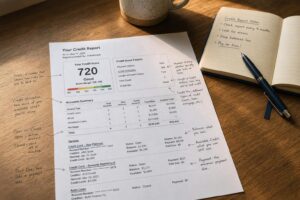
Check that any paused period shows correctly on all three reports; see how student loans affect your credit for what accurate reporting should look like.
Use pauses sparingly
Forbearance and deferment are useful tools for a rough patch, but they’re not free — interest often keeps growing, and you’re not making progress on the balance. If your hardship is longer-term, an income-driven repayment plan (which can lower payments while keeping you paying) may serve you better. Your servicer can walk you through the options — and it’s free.
Key takeaways
- Approved forbearance and deferment pause payments without hurting your credit by themselves.
- They should report as current or deferred — never as late.
- Deferment may cover interest on subsidized loans; forbearance lets interest build.
- Watch for a paused period misreported as a late payment, especially after a servicer transfer.
- For longer hardships, income-driven repayment may beat repeated forbearance — ask your servicer.
Make sure a paused loan is reporting right — free
A free 15-minute review shows how your student loans are reporting — including a deferment or forbearance that may be misreported as late. No obligation.
Free · about 15 minutes · no credit card · no obligation.
Sources: U.S. Department of Education / Federal Student Aid — deferment, forbearance, and income-driven repayment; Consumer Financial Protection Bureau (CFPB) — student loans and credit reporting; Fair Credit Reporting Act (FCRA) — disputing inaccurate information. This is general education, not financial advice.