Can You Get Your Car Back After a Repossession?
A repossession isn’t always the end of the road — but the window to get your car back is short, and the clock starts the moment it’s towed.
If your car was just repossessed, you may still have options — but not for long. Lenders usually sell repossessed vehicles at auction quickly, and once that happens, getting the car back is off the table.
There are two main paths before the auction: reinstatement and redemption. Here’s how each works, and what it means for your credit either way.
Reinstatement: catch up and resume the loan
Reinstatement means paying what you’re behind — the past-due payments plus repossession and storage fees — to bring the loan current and get the car back on the original terms. Not every state or lender allows it, and there’s usually a firm deadline, but where available it’s often the cheaper path.
Ask the lender in writing for the exact reinstatement amount and the deadline, and get a receipt for anything you pay.
Redemption: pay the full balance
Redemption means paying off the entire remaining loan balance (plus fees) in a lump sum to buy the car back outright. It’s a legal right in most places, but it’s expensive — you’re paying the whole loan at once — so it’s realistic mainly if you can raise the money or refinance.
Act before the auction
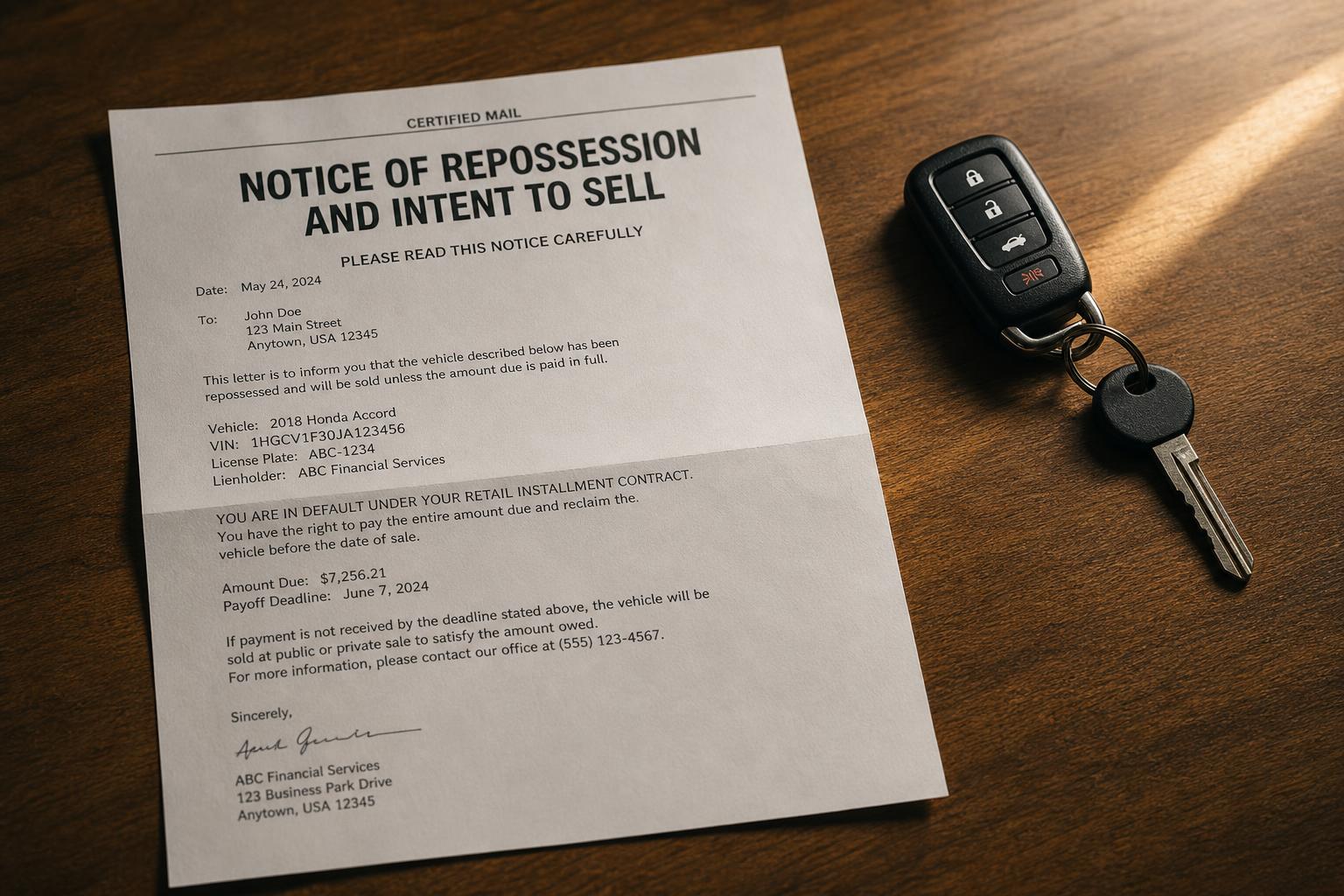
Both options usually disappear once the lender sells the car. After a repossession you’re entitled to notice of the sale, and that notice should spell out your right to reinstate or redeem and by when. Read it the day it arrives — the window is often just a couple of weeks.
If you can’t get it back
If neither path is workable, focus on limiting the damage. After the car sells, you may owe a deficiency balance — the gap between the loan and the sale price. Ask for that in writing and how it was calculated before you pay. Then the work shifts to your credit.
What a repossession means for your credit
Whether or not you recover the car, the repossession itself is reported and can stay on your credit for about seven years — see how long a repossession stays on your credit. Its impact fades over time, and if any of it is reported inaccurately, you have the right to dispute it. When you’re ready to move forward, rebuilding after a repossession walks through the steps.
Key takeaways
- You may be able to get a repossessed car back by reinstatement (catch up) or redemption (pay in full).
- Both usually have short deadlines and disappear once the car is auctioned.
- Read the sale notice immediately — it states your rights and the deadline.
- If you can’t recover it, get any deficiency balance documented before paying.
- The repossession stays on your credit ~7 years but fades; dispute anything inaccurate.
See what a repossession is doing to your credit — free
A free 15-minute review shows what’s reporting after a repossession — what may be inaccurate or disputable, and a realistic next step. No obligation.
Free · about 15 minutes · no credit card · no obligation.
Sources: Consumer Financial Protection Bureau (CFPB) — vehicle repossession, reinstatement, redemption, and deficiency balances; Federal Trade Commission (FTC) — your rights if your car is repossessed. Repossession rules and deadlines vary by state and lender. This is general education, not legal advice.